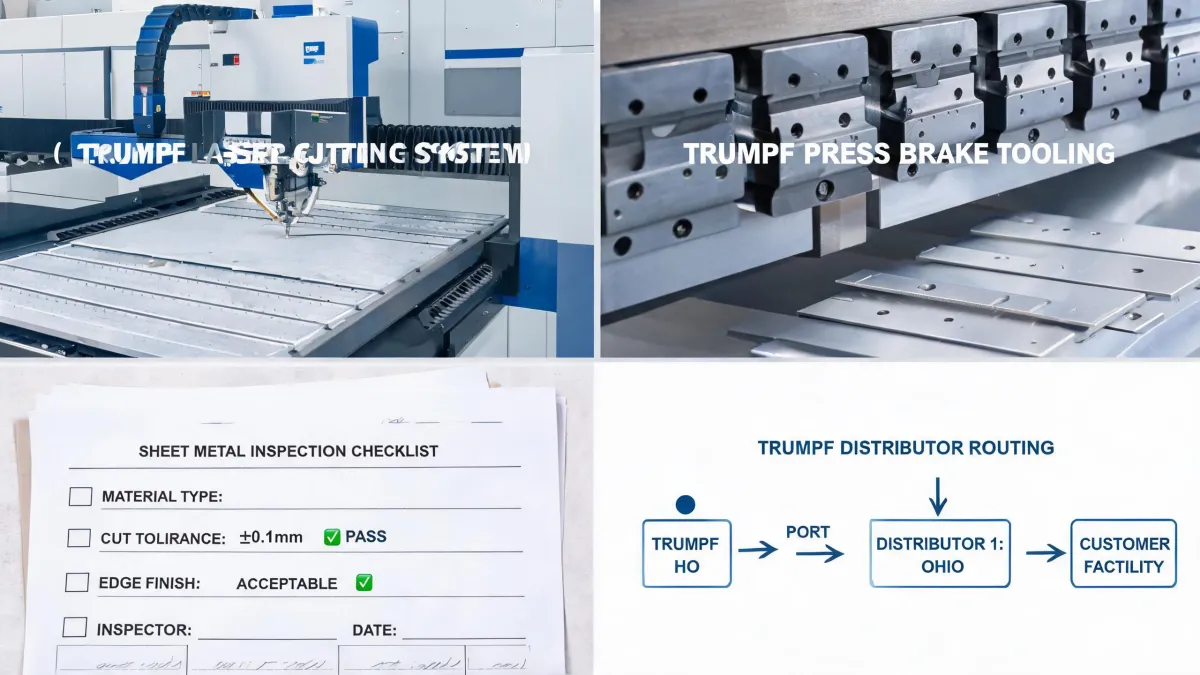
In Q2 2024, I had exactly three days to secure a new laser cutting machine for a critical production line. Long story short: I ended up paying about 20% more than the lowest quote. And I’d do it again.
Let me back up. Our old press brake had just failed catastrophically—controller fried, lead time on repair was six weeks. We needed a laser cutter to handle some overflow bending work until the repair came through. But the real panic was a $1.2M contract that hinged on our ability to deliver 5,000 sheet metal parts by the end of the month. Miss that deadline, and we’d face a penalty clause that would erase our entire quarterly profit.
So, in a hurry, I reached out to four vendors. Two were major players (Trumpf and Bystronic), one was a regional reseller of Chinese machines, and one was a small refurbisher with a ‘too good to be true’ price.
From the Outside, It Looks Simple
People assume the lowest quote is the smartest choice. I mean, it’s business, right? Keep costs down. But that’s a surface illusion. The reality is that for capital equipment, the sticker price is just the beginning.
Vendor C (the refurbisher) quoted $165,000. Vendor B (Bystronic) came in at $210,000. Trumpf was $245,000. My first reaction: Ouch. The refurbisher’s machine looked decent on paper—same wattage, same bed size, even a newer controller.
Then I started digging. The refurbisher’s quote didn’t include shipping ($6,500), installation ($4,200), training ($3,000), or a service contract ($12,000/year). Suddenly that $165,000 was $190,700 before the first cut. Trumpf’s quote included everything—site prep, installation, two-day on-site training, and a one-year comprehensive warranty. Their $245,000 was actually $245,000.
The Clock Was Ticking
I had two hours to decide before the end of business that Friday. Normally I’d gather more data, talk to current users, maybe even visit a showroom. Not this time. The CEO was pacing outside my office. Every hour of delay risked the contract.
I called a friend at another job shop who bought a budget laser cutter last year. His story: unit arrived a week late, the software was non-intuitive, and when the laser source failed after three months, the vendor charged $8,000 for a replacement diode. He told me, “If I could do it over, I’d have gone with Trumpf. Yes, it’s more upfront. But their support team picks up the phone in 15 minutes.”
That sealed it.
The Decision: Paying for Certainty
I signed the Trumpf PO five minutes before the deadline. The machine arrived on the promised date—a Tuesday, not a vague ‘week of’. Installation took two days. By Thursday afternoon we were running first articles. Total time from PO to production: 6 business days.
Did it cost more? Yes. Forty-five thousand more than the refurbisher’s number after all the add-ons. But here’s what would have happened if I’d chosen cheap: the refurbisher couldn’t guarantee delivery inside 14 days. Fourteen days. That would have pushed us past our contract deadline. The penalty? $15,000 per day after the 30th. So choosing the low price would have cost us a minimum of $15,000 in penalties, plus the lost trust with that client.
In the end, the Trumpf machine paid for itself inside six months through uptime alone. That’s the time certainty premium in action.
What I Learned (and What You Should Steal)
If you’re under pressure and need a laser cutter—or any capital equipment—here’s my three-step framework:
- Get the full TCO in writing before you compare. Ask each vendor to itemize delivery, installation, training, and first-year maintenance. I still have the spreadsheet from that week.
- Ask about delivery guarantees. A vendor that can commit to a firm date is worth a premium. In my case, Trumpf gave me a contract clause with a penalty if they missed the delivery window. Guess what? They showed up on time.
- Don’t ignore the opportunity cost of uncertainty. If you’re buying for a critical project, the cost of a delayed machine can dwarf the price difference. In my experience, paying 15–25% more for guaranteed delivery is almost always the cheaper path when you factor in lost revenue and penalties.
To be fair, I get why people chase the lowest quote. Budgets are real. I’ve been there. But when the clock is your enemy, the safest bet is often the most expensive one upfront.
Looking back, I should have planned a machine replacement cycle years earlier. But given the emergency, I did the best I could with the information I had. And I’d make the same call again.