The Day I Learned Cheap Timing Isn't Cheap
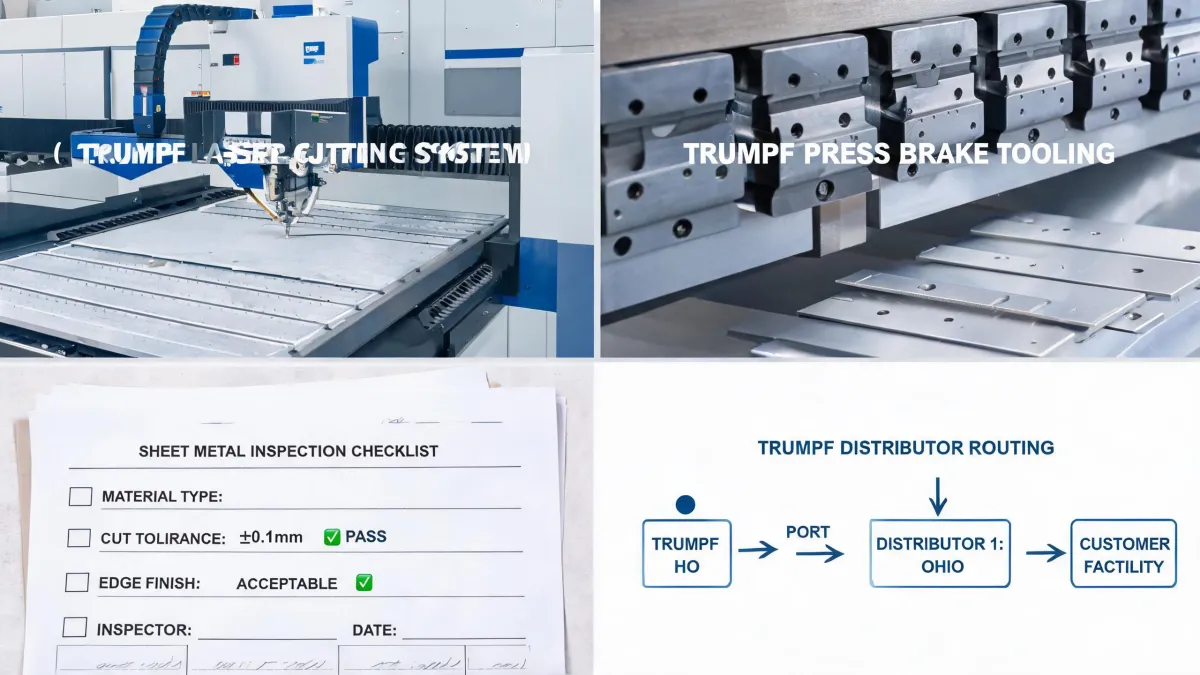
In early 2023, I was the office administrator for a 50-person job shop that does custom metal fabrication. We'd finally gotten approval for a Trumpf 3030 fiber laser—the one everyone on the production floor wanted. Budget was tight, so I went hunting for a distributor who could beat the list price.
Found one. Saved $2,200 on the quote. Paid the deposit. Then the phone stopped ringing.
Three weeks later, the distributor told me the 3030 was 'on a boat.' No tracking, no ETA. Our production manager was already scheduling jobs around the new machine. I kept pushing—'It'll be here next week'—until it wasn't. We missed a $15,000 contract because we couldn't meet the customer's timeline. The $2,200 saving? Long gone. Net loss: over $18,000 counting the rush reorder on a different machine from a reliable partner and the overtime labor to catch up.
"I learned the hard way: in manufacturing equipment, delivery certainty isn't a luxury—it's a financial hedge."
The Real Problem: It's Not Just About Price
Here's the thing I didn't understand back then. When you're buying a capital asset like a Trumpf laser cutting machine, you think you're comparing prices. But you're actually comparing risk profiles. A cheap quote from an unknown distributor means their supply chain is thin. They might not have the machine in stock. They might be back-ordering from a third party. They probably don't have the same relationship with Trumpf that an authorized partner has.
And when your production line goes down because the Trumpf 3030 fiber laser didn't arrive, the cost adds up fast: idle labor, missed deadlines, customer penalties, overtime for rework. I've seen it three times now across different equipment purchases. The same pattern: saved a little upfront, lost a lot later.
The 'Cheaper' Route: A Breakdown
Let's say you go with a non-authorized distributor for a Trumpf 3030. Maybe they shave 5% off the price. You think you're smart. But then:
- Lead time is ambiguous ("probably 6-8 weeks") — translates to 12+ weeks when delays hit.
- No guaranteed delivery date — so you can't plan.
- Warranty support is murky — who services it? The distributor or Trumpf?
I used to think these were theoretical risks. After my $18,000 mistake, I treat them as certainties.
The Hidden Cost of 'Probably On Time'
In my purchasing role—processing about 60–80 orders a year, from China end mill bits for steel to million-dollar laser systems—I've learned that ambiguity in timing is the most expensive line item. It doesn't show up on the invoice. It shows up in the P&L later.
Think about it: when you buy a Trumpf laser cutting machine, you're committing to workflows, operator training, floor space. Every week of delay costs you potential revenue. I did the math for our shop: a week of machine downtime costs roughly $4,500 in lost billable hours. So a 4-week delay burns $18,000—exactly what I lost.
"In my experience, the cheapest option is rarely the cheapest when you factor in the cost of uncertainty."
How Time Certainty Changed My Vendor Selection
After that disaster, I changed my approach. Now, when evaluating a Trumpf laser cutting machines distributor, I ask three things:
- Do they have the machine in stock or a confirmed production slot from Trumpf? If it's not a solid date, it's not real.
- What's the penalty if they miss delivery? A real guarantee means they stand behind the date.
- Can they provide a timeline in writing? Verbal promises are worthless—I learned that the hard way.
I'm willing to pay a 10–15% premium for a distributor who answers 'yes' to all three. Because the risk of delay isn't worth the discount.
Why I Now Choose the Authorized Route (Even When It Costs More)
Look, I'm not saying every non-authorized distributor is bad. Some are great. But when you're buying a precision tool like a Trumpf 3030 fiber laser, the distribution channel matters. Authorized partners typically have direct access to Trumpf's inventory, training, and service network. They can promise a delivery window with confidence because they have a contractual pipeline.
I remember in late 2024, we needed a second machine urgently. I went straight to a Tier 1 distributor. They quoted $3,000 higher than a competitor. But they guaranteed a 3-week delivery. The competitor said 'maybe 4–8 weeks.' I paid the premium. The machine arrived in 2.5 weeks. We didn't miss a single order. That $3,000 'extra' was actually the cheapest money we spent that quarter.
The Bigger Picture: Time Certainty in Industrial Procurement
If you're managing procurement for a manufacturing company, you've probably seen the same tension. The finance team wants the lowest price. Operations wants reliability. You're in the middle. My advice from years in the chair: always prioritize delivery certainty over price for equipment that drives your production.
This principle isn't just for laser cutters. It applies to key cutting tool xhorse dolphin xp005 manual supplies, china end mill bits for steel orders, and even consumables like coatings (yes, I once asked myself 'when can I stop using aquaphor after co2 laser?'—the medical analogy works: the healing timeline is just as critical). In every case, the cost of a delayed shipment multiplies exponentially when it hits production.
One Final Tip: Verify, Verify, Verify
I know this sounds basic, but after five years of managing vendor relationships, I still catch myself almost making the same mistake. When a distributor promises a delivery date, ask for proof. Ask for the Trumpf order number. Ask for the shipping manifest. If they can't show you something concrete, that's a red flag.
This pricing information was accurate as of Q4 2024. The industrial equipment market changes quickly—especially with Trumpf's lead times fluctuating based on global demand. Always check current availability before committing. But the principle remains: time certainty is worth paying for.
I haven't regretted a single higher-priced, guaranteed-delivery purchase since 2023. And I don't plan to start now.