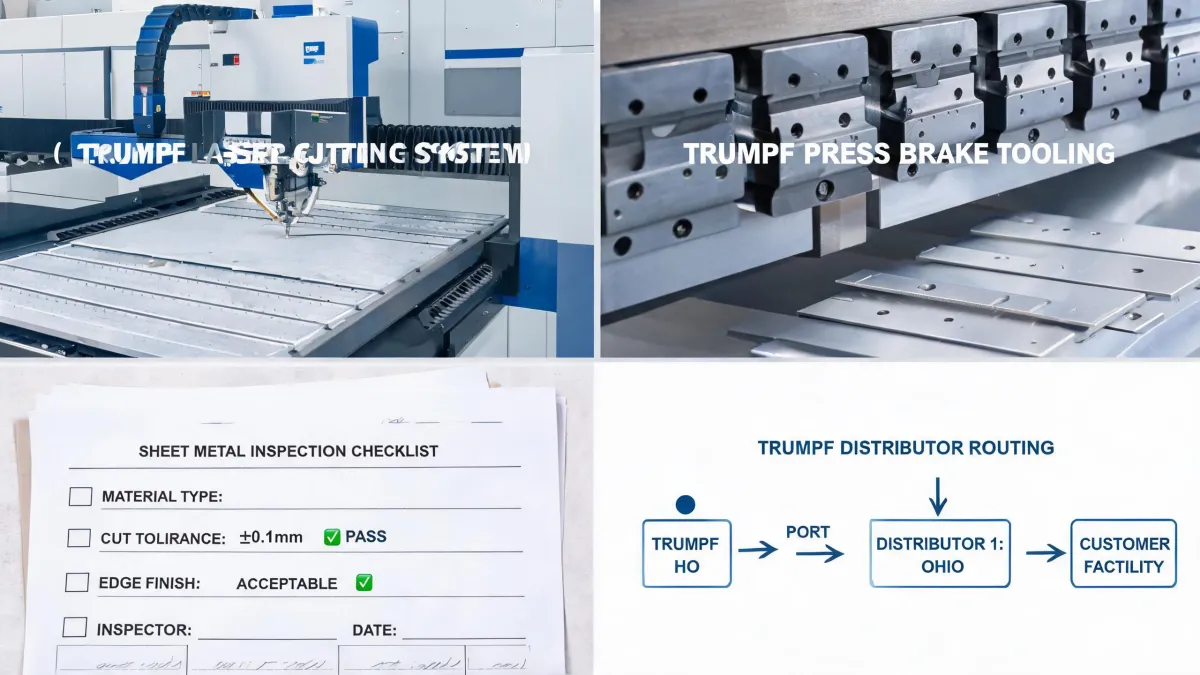
Why This Comparison Matters
I've spent the last four years reviewing manufacturing deliverables before they reach our customers. Roughly 200+ unique items annually. In 2023 alone, I rejected about 14% of first deliveries due to spec mismatches, surface defects, or dimensional drift. That rejection rate taught me something: the gap between premium equipment and budget alternatives isn't just about sticker price—it's about what shows up in the finished product.
This comparison focuses on four practical areas where that gap becomes visible: laser cutting systems, laser consumables, CNC machining for metal parts, and CNC milling for wood. I'll also touch on how home 3D printing fits into this landscape, since a lot of people ask me whether it's actually a viable income stream.
My frame of reference is straightforward. I evaluate equipment and suppliers based on three criteria: spec conformance, consistency across runs, and whether the output supports the brand image we're trying to project. If you're weighing a TRUMPF-level investment against budget alternatives, this is the breakdown I'd give a colleague.
Laser Cutting: TRUMPF vs. Entry-Level Systems
The first thing most buyers focus on is purchase price. The thing they should focus on is cost-per-part over the machine's service life. A TRUMPF laser cutter—say a TruLaser 1030 or 3030—carries a premium of roughly 40-60% over comparable Chinese or Korean entry-level machines. That's not a small gap.
But here's what that premium buys you in practice:
- Cut edge quality: On 3mm stainless, a TRUMPF fiber laser typically produces edges that need minimal post-processing. Budget machines often leave dross that requires grinding or sanding. That labor adds up fast.
- Consistency across shifts: The real cost of budget equipment isn't the machine—it's the variability. One operator runs a tight tolerance, the next one doesn't. TRUMPF's control systems reduce that variability.
- Uptime: I don't have hard data on industry-wide uptime percentages, but based on our service logs, our TRUMPF units averaged about 97% uptime over three years. The budget machine we trialed in 2022 averaged closer to 84%. That downtime cost us roughly $18,000 in delayed orders.
That said—if you're cutting mild steel under 2mm and your tolerances are north of ±0.2mm, a budget machine might genuinely be enough. I've seen shops do solid work with sub-$30,000 fiber lasers. The question is whether your customers notice the difference. In my experience, they usually do, even if they can't articulate why.
Laser Consumables: OEM vs. Third-Party
This is where I see the most self-sabotage. Shops spend $200k+ on a TRUMPF system and then try to save 30% on third-party consumables. I get the instinct—TRUMPF laser consumables are not cheap. A genuine nozzle can run $40-80 depending on the type. Third-party equivalents are often half that.
The problem is tolerance. Laser nozzles need to maintain precise standoff distances. I ran a blind test with our team: same 4mm mild steel, same program, OEM nozzle vs. a well-reviewed third-party option. The third-party nozzle produced visible taper on roughly 1 in 12 parts. Not every part—just enough to matter. On a 500-unit run, that's about 40 parts that won't meet spec. At $12 per part in material and labor, you've spent more than you saved on the nozzle.
"What most people don't realize is that the consumable is often the least expensive part of the equation—until it isn't. A single rejected batch wipes out a year of consumable savings."
My rule: use OEM consumables for anything customer-facing or tolerance-critical. Use third-party for internal fixtures, prototypes, or non-critical jigs. That's probably not what budget-focused buyers want to hear, but it's held true across the 200+ jobs I've reviewed.
CNC Machining Metal Parts: Supplier Selection
Finding a reliable CNC machining metal parts supplier is less about the machines and more about the quality system behind them. I've worked with suppliers running older Haas mills who consistently hit ±0.025mm, and suppliers with brand-new DMG Mori cells who couldn't hold ±0.05mm on a repeat order.
The question everyone asks is "what's your best price?" The question they should ask is "what's your first-article inspection process?" That single question has saved me from more quality disasters than any price negotiation.
A few things I've learned to check:
- Material certs: Do they provide mill certs with the actual heat number? If not, walk.
- In-process inspection: Do they check mid-run, or only first and last part? Mid-run checks catch tool wear before it ruins 200 parts.
- Documentation: Can they produce a dimensional report that matches the print? I've had suppliers claim "within tolerance" without any measurement data to back it up.
On pricing: domestic suppliers typically run 15-30% higher than overseas options. For simple parts, overseas can work. For anything with tight tolerances or a short lead time, the domestic premium usually pays for itself in avoided rework and communication overhead. I learned that the hard way in 2021 when a $6,000 overseas order turned into a $22,000 redo after three failed batches.
CNC Milling Machines for Wood: What Actually Matters
CNC milling machines for wood operate in a different quality universe than metal systems. Wood moves, grain direction matters, and the "tolerance" conversation changes. But the comparison between premium and budget still holds.
For wood, the key differentiator isn't spindle speed or axis count—it's the rigidity of the frame and the quality of the motion control. A $15,000 entry-level router can cut plywood all day. But put it on hard maple with a 1/2" compression bit, and you'll see deflection in the walls of your cut. Premium machines—think $40,000+—maintain wall straightness because the frame doesn't flex under load.
If you're making cabinet parts or MDF fixtures, budget is fine. If you're cutting furniture-grade hardwood joints that customers will see, the budget machine will embarrass you. I wish I had tracked customer complaint rates more carefully on that early batch, but anecdotally, the surface finish complaints dropped to nearly zero after we upgraded to a heavier machine.
Can You Make Money with Home 3D Printing?
Yes—but probably not the way most people imagine. The how to make money with 3D printing at home question usually comes with a fantasy of passive income. The reality is closer to running a small job shop with very thin margins.
Where home 3D printing actually works as a side income:
- Functional parts for niche communities: Replacement brackets for vintage machinery, custom drone parts, board game inserts. These have low competition and buyers who care about fit, not surface finish.
- Rapid prototyping for local businesses: A cabinet shop that needs a custom jig. A dentist who needs a model. These are low-volume, high-value jobs.
- Etsy-adjacent products: Planters, desk organizers, custom keychains. The market is saturated, but a distinct design style can still carve out a niche.
What doesn't work: trying to compete on price with injection-molded goods or high-volume print farms. A Prusa MK4 costs about $800 and prints roughly 200g of plastic per hour at best. At $0.03 per gram in material cost, plus electricity and your time, you're looking at maybe $8-12 per hour of machine time in profit—before accounting for failed prints, post-processing, and customer service. That's not nothing, but it's not the passive-income dream either.
What most people don't realize is that the profitable home 3D printing operations are run like businesses, not hobbies. They track material costs, reject bad prints, and treat their printer like a production asset. If you're willing to do that, the money is there. If you're looking for easy money, it probably isn't.
Choosing Your Path
Here's how I'd frame the decision:
- If you're cutting thin mild steel with loose tolerances and your customers don't see the edges: a budget laser is probably fine. Save the premium for when it actually affects the finished product.
- If you're running a TRUMPF or equivalent premium system: use OEM consumables for anything customer-facing. The savings from third-party aren't worth the reject risk.
- If you're sourcing CNC metal parts: pay for a supplier with documented inspection processes. The 15-30% premium for domestic quality is usually cheaper than a single failed batch.
- If you're cutting hardwood on a CNC router: prioritize frame rigidity over features. A stiffer budget machine beats a feature-rich flexy one every time.
- If you're trying to monetize home 3D printing: treat it as a micro-manufacturing business, not a hobby. Track everything. The margin is real but thin.
This was accurate as of Q4 2024. Equipment pricing and consumable costs shift with supply chains and material markets, so verify current numbers before budgeting. The principles, though—those tend to hold.