The 2 a.m. call isn't usually about CNC speed
I coordinate emergency tooling and fabrication at a contract manufacturer. We run TRUMPF fiber lasers, press brakes, and a small additive repair cell. In my role handling rush jobs for Tier 1 and Tier 2 automotive clients, I've handled 60+ emergency tooling orders over the last four years, including same-day turnarounds for stamping plants that were already losing production.
When the phone rings at 2 a.m., the story is almost always the same: an automotive progressive die has crashed, an automotive mold is flashing bad parts, or a batch of cnc car parts is holding up a tryout. The plant manager says, 'We need a cnc car parts shop that can move faster.' Or: 'Find an automotive mold maker who can turn this around today.'
That's the surface problem. The real problem is almost never machining speed.
The question everyone asks is wrong
The question everyone asks is, 'How fast can you cut this?' The question they should ask is, 'What has to happen before and after the cut?'
Most buyers focus on spindle time or machine hourly rate and completely miss the hidden sequence: fixture design, material certification, heat treat, EDM, CMM inspection, tryout, texture, and documentation. In stamping in car manufacturing, a die is not a single part. It's a system. A automotive die may have dozens of stations, hundreds of components, and a validation chain that is longer than the actual cutting.
Why does a die that ran fine yesterday crack today? Often because the heat-treat batch was off, the shim stack changed, or the press tonnage drifted. Not because the last cnc car parts were cut too slowly.
The deep cause: validation bottlenecks, not spindle bottlenecks
What I mean is that the emergency is usually created upstream. A tool shop quotes 10 days for an automotive mold repair, but the real lead time is 10 days plus the CMM queue, plus the tryout press window, plus the PPAP paperwork. When you're already late, those queues become the bottleneck.
According to IATF (iatfglobaloversight.org), IATF 16949:2016 is the automotive quality management standard that governs many Tier 1 and Tier 2 production processes. It doesn't just ask for good parts. It asks for traceability, corrective action, and evidence. That evidence can add days to a rush job if it wasn't planned for.
According to ISO (iso.org), ISO 2768-1 sets general tolerances for linear and angular dimensions without individual tolerance indications. In automotive tooling, those general tolerances are only the floor. A automotive progressive die may need much tighter fits on pilots, guides, and punches. If a shop quotes from general tolerances and then discovers the real requirement during tryout, the schedule explodes.
I knew I should verify the heat-treat certification on a replacement punch, but I thought, 'What are the odds?' The odds caught up with me when the punch cracked during tryout. We lost 36 hours and about $18,000 in overtime, air freight, and a missed production window. That's when we implemented a rule: no heat-treat batch goes into an automotive die without a cert and a hardness check. (Note to self: verify the batch number every time, not just when the job feels risky.)
The cost isn't the rush fee. It's the line-down.
When stamping in car manufacturing stops, the cost is not just the tooling invoice. It's the downstream assembly line, the idle labor, the expedited freight, and the customer's confidence. In one case, a Tier 1 supplier was 36 hours from a line-down penalty. If I remember correctly, the penalty clause was $50,000. We found a vendor with laser welding and additive repair capability, paid $6,500 in rush fees on top of the $14,000 base repair, and delivered in 31 hours. The client's alternative was to wait four days for a new die section.
That's the total-cost trap. The $500 quote for a cnc car parts job turned into $800 after setup, inspection, and revision fees. The $650 all-inclusive quote was actually cheaper. I now calculate TCO before comparing any vendor quotes: unit price + setup + heat treat + inspection + tryout + freight + risk of rework + downtime exposure.
The 'local mold maker is always faster' thinking comes from an era before connected CNC programming, digital inspection, and additive repair. Today, a well-organized remote automotive mold maker with the right data can beat a disorganized local shop that is already overloaded. But only if the data transfer, fixture strategy, and validation steps are planned.
What actually works when the clock is running
The fix is not a magic machine. It's a shorter validation chain. Here's what I've seen work on rush automotive die and automotive mold jobs:
- Pre-validated materials and heat-treat partners. Know who can turn a cert and hardness check in hours, not days.
- Digital backups of critical components. If an automotive progressive die has a known wear part, have the CAD, CAM, and inspection plan ready.
- Laser welding and additive repair for damaged sections. Sometimes you don't need a new block; you need a qualified repair that maintains hardness and geometry.
- One accountable coordinator. Not three vendors blaming each other. One person who owns the tryout window.
- TCO-based vendor selection. The cheapest hourly rate is irrelevant if it adds two days of CMM queue.
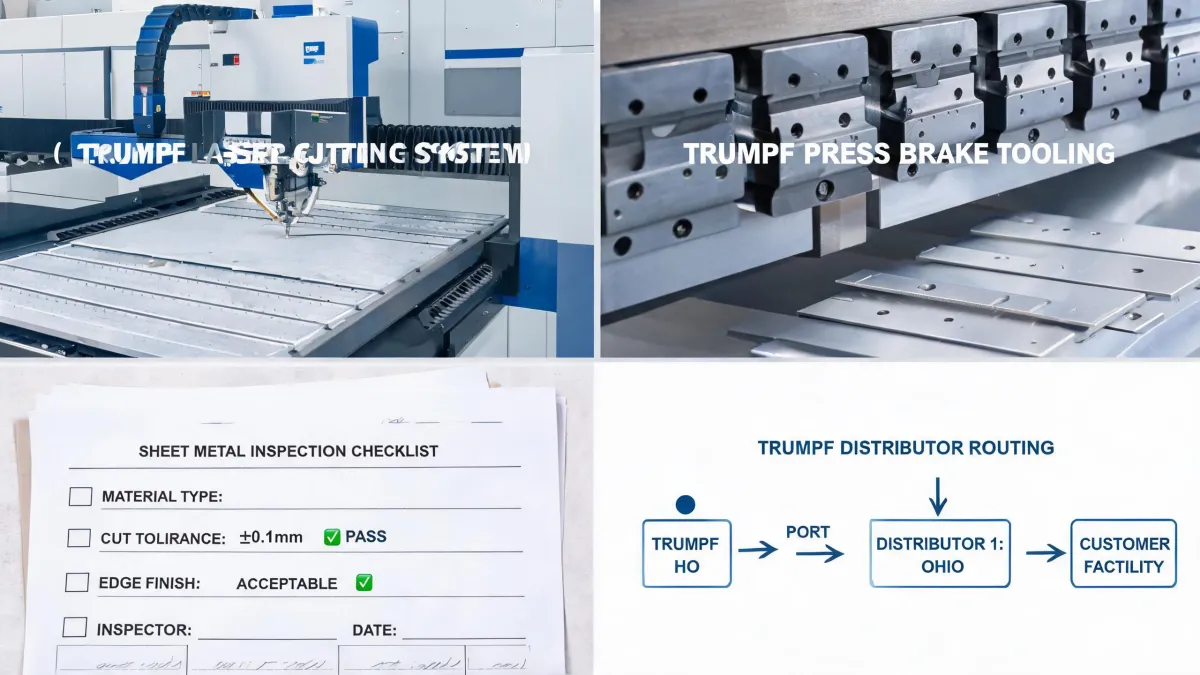
We run TRUMPF laser systems in our toolroom, and they help with precision cutting and repair. But the machine is not the strategy. The strategy is knowing which steps can be parallelized, which can be skipped only with risk, and which can never be skipped in automotive work.
The part most people miss
The next time an automotive die or automotive mold is late, don't just ask for a faster cnc car parts quote. Ask where the validation queue is. Ask who owns the tryout press. Ask what the heat-treat batch number is. Ask what happens if the first tryout fails.
That's the difference between a rush job and a recovery plan. The rush fee is visible. The downtime is not. Calculate the total cost before you choose the cheapest path—because in stamping in car manufacturing, the most expensive quote is often the one that looked cheapest at 2 a.m.