- There Is No Single Best Quote — Start With Your Scenario
-
Scenario A: You're Buying a Press Brake for Sheet Metal
-
Scenario B: You're in Medical or Small Precision Molding
-
Scenario C: You're Buying CNC Milling Tooling, Including a China 1 mm CNC End Mill
-
Scenario D: You're Asking Which Software Is Best for CNC Milling Operations
-
How to Tell Which Scenario You're In
There Is No Single Best Quote — Start With Your Scenario
I've been handling capital equipment and tooling orders for 11 years. I've personally made and documented 7 significant mistakes, totaling roughly $84,000 in wasted budget. Now I maintain our team's pre-check list to prevent others from repeating my errors.
When I first started buying equipment in 2017, I assumed the lowest quote was always the best quote. Three budget overruns later, I learned about total cost of ownership. Here's the thing: the right buying advice for a TRUMPF TruBend press brake is not the same as for a China 1 mm CNC end mill or a 33 ton all-electric injection molding machine. Same for which software is best for CNC milling operations. So I split it into four scenarios. Find yourself first.
The four scenarios I use
Sheet metal bending. Regulated medical or small precision molding. CNC milling tooling. CNC milling software. If you're in more than one, handle them separately. The TCO logic stays; the line items change.
Scenario A: You're Buying a Press Brake for Sheet Metal
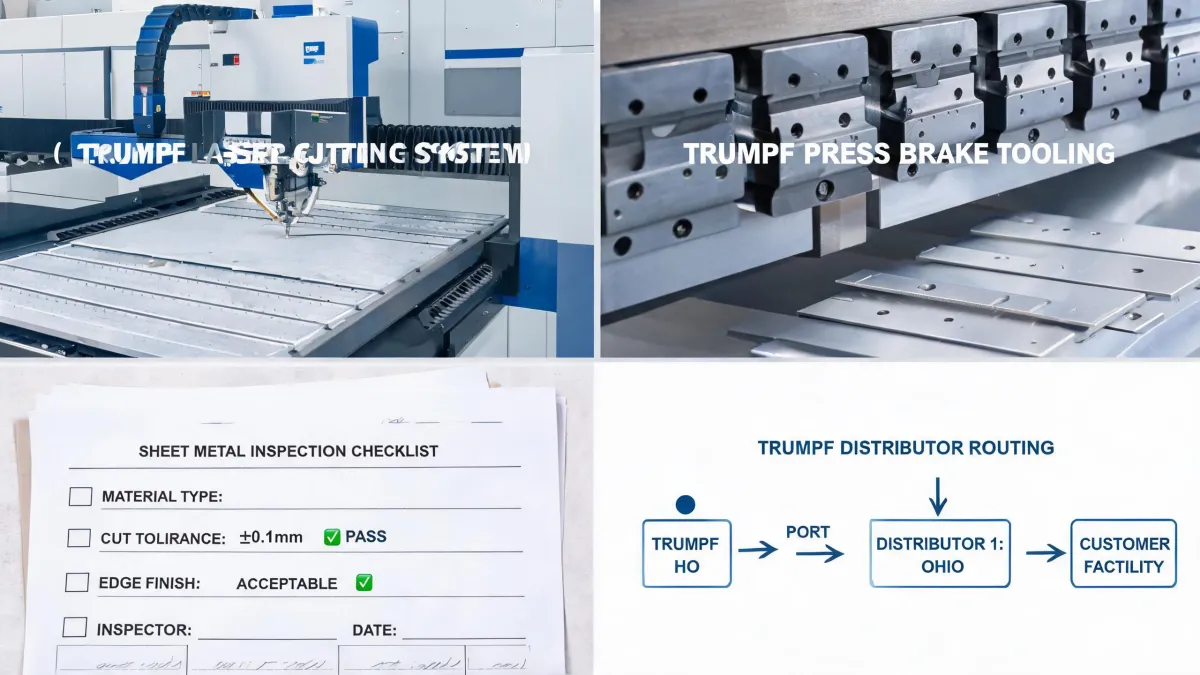
If you're comparing a TRUMPF TruBend press brake against other machines, don't start with tonnage and price. TRUMPF is a technology leader in industrial laser systems and sheet metal fabrication, so the machine often comes up in serious comparisons. But the brand name doesn't replace the line-item math. Start with part mix. High-mix, low-volume? You need fast setup, offline programming, bend simulation, and tooling availability. High-volume simple bends? A basic machine may be fine.
My mistake in 2019: I approved a quote because the machine price looked good. I missed that the quoted tooling didn't include the special punches we needed (note to self: always get the tooling list line-by-line). The first job stalled for 9 days. Cost: $2,800 in overtime plus a late delivery. Not ideal, but workable? No. It was avoidable.
TCO for a press brake: base machine + tooling + backgauge and options + software + install + training + service contract + spare parts + downtime + scrap and rework. If a vendor quotes positioning accuracy, ask which standard the number follows. ISO 230-2 is one common reference for NC axis positioning. For a TRUMPF TruBend, ask for the actual configuration that matches your parts, not a stripped quote. And get the service SLA in writing. The machine is only as good as the support behind it.
If your shop is moving toward smart factory integration, make sure the controller and software can talk to your ERP or MES. Otherwise you'll pay twice: once for the machine, once for the integration you didn't plan.
Scenario B: You're in Medical or Small Precision Molding
When the work touches medical, the TCO formula changes. Validation, documentation, traceability, and change control can outweigh the equipment price. If you're evaluating TRUMPF Medical equipment or a 33 ton all-electric injection molding machine for small medical components, put these in the quote comparison:
- Factory acceptance test and site acceptance test support
- IQ/OQ/PQ documentation, if applicable
- Calibration and preventive maintenance schedule
- Spare parts lead time
- Software validation and data integrity support
- Training for operators and maintenance
I got burned in September 2022 on a small molding project. The machine price was fine. The mold trials, chiller, dryer, and robot interface were not. We spent $6,400 beyond the approved budget. I still kick myself for not forcing a line-item quote that included auxiliaries. If I'd done that, we'd have caught the gap before the PO.
For a 33 ton all-electric injection molding machine, the all-electric argument is usually about repeatability, energy use, and cleaner operation, not just cycle time. But verify with your specific mold and material. A 33-ton machine can be perfect for small precision parts and completely wrong for a thick-wall part with a long cooling time.
Scenario C: You're Buying CNC Milling Tooling, Including a China 1 mm CNC End Mill
This is where cheap gets expensive. A China 1 mm CNC end mill can be a legitimate option if you test the lot, measure runout, and verify coating and geometry. But if the shank tolerance is inconsistent, you'll break tools, scrap parts, and lose spindle time. The tool price is not the cost. The cost is tool price + inspection + scrap + rework + machine downtime + operator frustration.
My rule for small end mills: buy a sample lot. Run it on your worst-case feature. Measure tool life against your current supplier. If the cheap tool lasts 30% as long, it isn't cheap. If it lasts 80% as long at half the price, it might be worth a trial. But document everything (note to self: add lot number and runout to the pre-check list).
Also watch the hidden costs: shipping from China, customs, currency, minimum order quantity, and the time your team spends inspecting incoming tools. Those are real. I once saved $400 on a tool order and spent $1,100 in engineering time verifying it. So glad I caught the bad lot before it hit production. Almost skipped the incoming inspection to save a day.
Scenario D: You're Asking Which Software Is Best for CNC Milling Operations
There is no universal answer. The best software for CNC milling operations depends on your parts, machines, postprocessors, and people. A 3-axis job shop and a 5-axis aerospace cell need different tools. A shop with experienced programmers can tolerate a steeper learning curve. A shop with high turnover cannot.
Don't buy on demo. Buy on postprocessor validation. The postprocessor is the make-or-break part. Ask the vendor to prove the post works on your exact machine and control. Run a test part with simulation, stock model, fixture, and toolpath. If they can't do that, the license price is irrelevant. You'll pay for it in crashes and scrap.
TCO for CNC software: license + postprocessor + training + implementation + annual maintenance + simulation add-ons + IT and security review + downtime during rollout. I approved a software switch in Q1 2024. The demo was smooth. The postprocessor took 6 weeks to dial in. We lost 3 days of production. Even after signing, I kept second-guessing. What if the post was never going to be right? After the third rejection in Q1 2024, I created our pre-check list. That list now includes a postprocessor test before any software PO.
Look, I'm not saying the most expensive software is always best. I'm saying the cheapest license with no post support is the most expensive mistake. Which software is best for CNC milling operations? The one that runs your parts, on your machines, with your team, and has support that answers when it breaks.
How to Tell Which Scenario You're In
Answer these five questions before you compare quotes:
- Is the output a bent sheet metal part, a molded part, a milled part, or a software workflow?
- Does the part touch a regulated industry such as medical, aerospace, or automotive safety? If yes, validation and traceability go into TCO.
- Is the process high-mix, low-volume or low-mix, high-volume? High-mix favors setup speed and software. High-volume favors cycle time and automation.
- What is your real bottleneck: machine time, operator skill, inspection, or cash flow?
- What happens if the vendor is late, wrong, or unresponsive? Put a dollar figure on that risk.
Total cost of ownership includes: base price, setup and install, tooling, software, training, service, downtime, risk, and rework. The lowest quoted price often isn't the lowest total cost. Verify current vendor quotes and specs, January 2025.
If you're buying a TRUMPF TruBend press brake, use Scenario A. If you're specifying TRUMPF Medical equipment or a 33 ton all-electric injection molding machine, use Scenario B. If you're sourcing a China 1 mm CNC end mill, use Scenario C. If you're asking which software is best for CNC milling operations, use Scenario D. If you're in more than one, run the TCO math separately for each. Otherwise you'll hide a bad decision inside a good one.
Three things: pre-check the line items, calculate TCO, and get the service commitment in writing. In that order. That's the checklist I wish I'd had in 2017.