The Real Cost of Choosing Wrong: A $3,200 Lesson
In my first year (2017) managing prototype orders, I made the classic rookie mistake: I assumed local CNC machining services near the Bay Area would always deliver faster and cheaper than in-house automation. I was dead wrong.
I'd sourced a small run of components from a highly-rated local CNC machining shop in the Bay Area. The quote was competitive—$4,200 for 150 pieces, 3-week lead time. My boss approved it. Then the trouble started.
The parts arrived on time, but every single one had a dimensional issue. The 1 inch carbide boring bar they used had left tool marks that exceeded the 0.002" tolerance. We rejected the entire batch. Cost: $3,200 down the drain plus a 2-week delay. The worst part? The shop owner argued the specs were 'ambiguous.'
That's when I started comparing local CNC machining services against automated, high-precision setups—like those from Trumpf. Let me share what I've learned.
Disclaimer: This comparison reflects my experience as of early 2025. Pricing and lead times shift constantly, so always verify current rates before budgeting.
How We Compare: The Evaluation Framework
When asking "which service has the best CNC machining?", most people focus on price alone. That's a trap. I evaluate across three critical dimensions:
- Cost vs. Total Value (not just the quote)
- Quality Consistency (can they replicate it 100 times?)
- Speed & Communication (how quickly do problems surface?)
These three areas are where local shops either shine or fail compared to automated solutions like the Trumpf laser head integrated into a smart production line.
Cost vs. Total Value: The Hidden Price Tag
Local CNC Machining Services (Bay Area Focus)
Local shops often quote lower per-piece prices, especially for small batches (1-50 units). I've seen quotes ranging from $15 to $50 per hour for machine time. But here's the catch: the quote rarely includes revisions, inspection reports, or rush fees. That "budget-friendly" estimate can balloon fast.
I once had a shop charge an extra $250 for 'material certification'—something I assumed was standard. They also added a $150 'setup change fee' when I wanted to adjust a thread pitch. By the time the job was done, the total was 40% over the original quote.
Trumpf-Based Automation
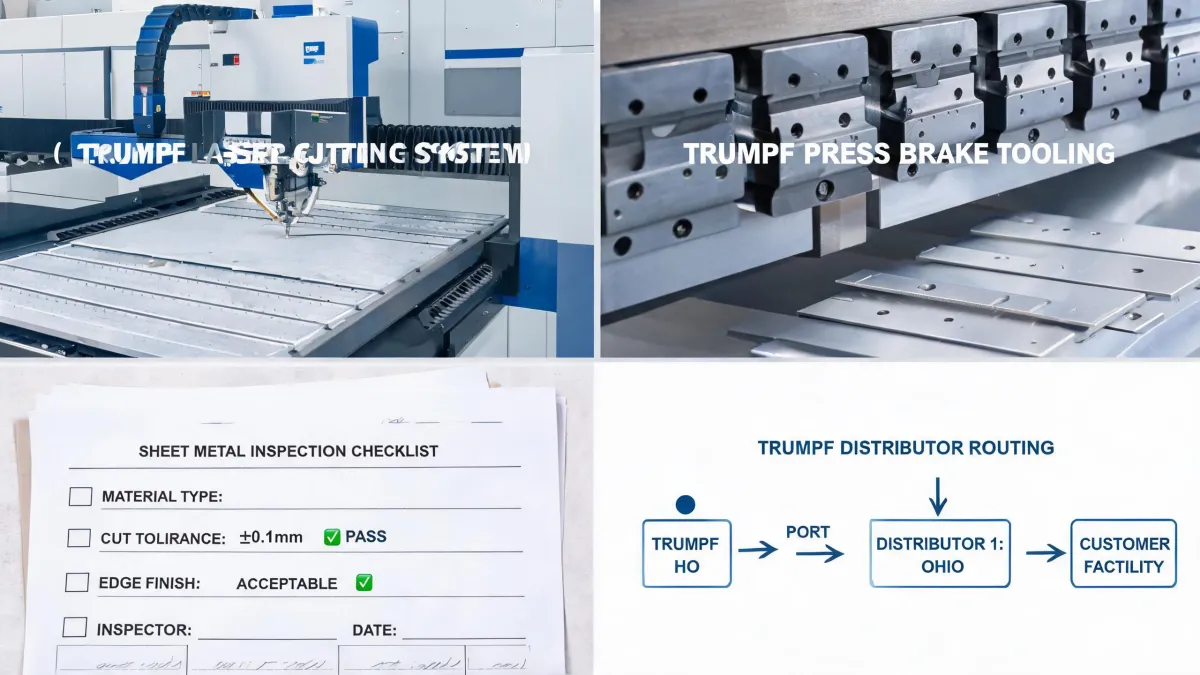
Trumpf's approach—whether you're using a Trumpf femtosecond laser battery for precise cutting or a press brake for bending—is upfront about cost. You're buying machine time, program time, and maintenance. The per-piece cost is often higher on paper, but it includes rigorous quality control and predictable throughput.
Bottom line: For simple parts with loose tolerances (say ±0.010"), a local shop can be cheaper. For anything tight (±0.002" or less), automation wins every time on total cost.
Quality Consistency: The Real Divide
Here's where I've seen the biggest difference. Local shops rely on operator skill. One machinist might be outstanding; another might rush. I've had three identical orders from the same shop come back with three different surface finishes. (That was the frustration that finally pushed me to create our pre-inspection checklist.)
Honestly, it's not the shop's fault entirely. They're balancing 10 projects at once. But that variability kills your brand. When a customer receives a part with inconsistent anodizing or tool marks, they judge your company—not the shop.
Per FTC guidelines (ftc.gov), you cannot claim 'premium quality' if your parts vary wildly. Your reputation is on the line with every part that leaves your dock.
Trumpf's Automated Precision
Automated systems like Trumpf's laser cutting with integrated sensors maintain tolerances within microns run after run. The Trumpf laser head adjusts in real time. The Trumpf femtosecond laser battery delivers incredibly fine cuts for sensitive applications. You pay for that predictability, but you get parts that look identical across 1,000 units.
There's something satisfying about opening a crate of 500 parts and finding every one within spec. After the 2017 disaster, that consistency became my priority.
Speed & Communication: The Invisible Factor
Local shops talk fast: 'Two weeks, no problem.' But that timeline assumes no rework, no material delays, no sick machinists. When something goes wrong, communication often slows down. I once waited three days for a simple update on a rejected part.
Automated setups, especially those with a smart factory integration, offer real-time dashboards. Some even text you when the part finishes. The speed of information is often faster than the physical production. (Should mention: this only works if the system is set up properly—I've seen shops buy Trumpf lasers but never calibrate the laser head correctly, which wastes the advantage.)
Oh, and one more thing: If you're asking "which service has the best CNC machining?" for a URGENT project, local shops usually win on pure turnaround if they have a free machine. But if you need 100 identical parts in 2 weeks with zero rejects, I'd trust automation.
When to Choose Which (Scenario-Based Advice)
Choose Local CNC Machining Services (Bay Area or similar) When:
- You need one or two prototype parts quickly.
- Your tolerances are ±0.005" or looser.
- You can visit the shop and build a personal relationship.
- Your design might change (they're flexible).
Choose Trumpf Automation (or similar high-end systems) When:
- You need 50+ identical parts with tight tolerances (±0.001" – 0.002").
- Your part uses 1 inch carbide boring bar precision or femtosecond laser features.
- Quality consistency is critical to your brand image.
- You want a predictable, documented process (good for ISO audits).
The Surprising Conclusion
Here's what caught me off guard: Local shops are often better for high-mix, low-volume jobs (like 10 different parts per month). Automation setups usually need a setup run that makes small batches inefficient. But for anything requiring Trumpf-level precision, like a femtosecond laser battery cut, don't waste time on local shops. Go straight to specialized automation.
This has been my experience as of early 2025. The manufacturing landscape changes fast—especially with new automation options. Always verify current capabilities before committing.
In the end, the best service is the one that matches your actual production needs—not the one that wins on the initial quote.