In Q1 2024, I reviewed a purchase proposal for a double column CNC milling machine. The buyer's comparison spreadsheet showed two options with near-identical specs: same spindle speed, same axis travel, same quoted positioning accuracy. One machine cost $118,000. The other cost $74,500. The approval team looked at me and asked, "What's to discuss?"
That's the surface problem: when specifications look identical on paper, price decides. And that's exactly where the trouble starts.
The Surface Problem: Spec Sheets Don't Tell the Whole Story
For anyone sourcing manufacturing equipment — laser cutters, machining centers, press brakes — the spec sheet is the default comparison tool. It's concrete, standardized, and fits neatly into a spreadsheet. But a spec sheet is a claim, not a promise. It describes what the manufacturer measured under their own test conditions. It doesn't describe what happens on your shop floor, with your parts, running your shifts.
I've been reviewing supplier deliverables for eight years — roughly 200 items annually, with about 10-12% of first deliveries missing their stated specifications (maybe 9%, I'd have to check the 2024 audit log). That's not because suppliers are dishonest. It's because a specification is only as good as the verification system behind it.
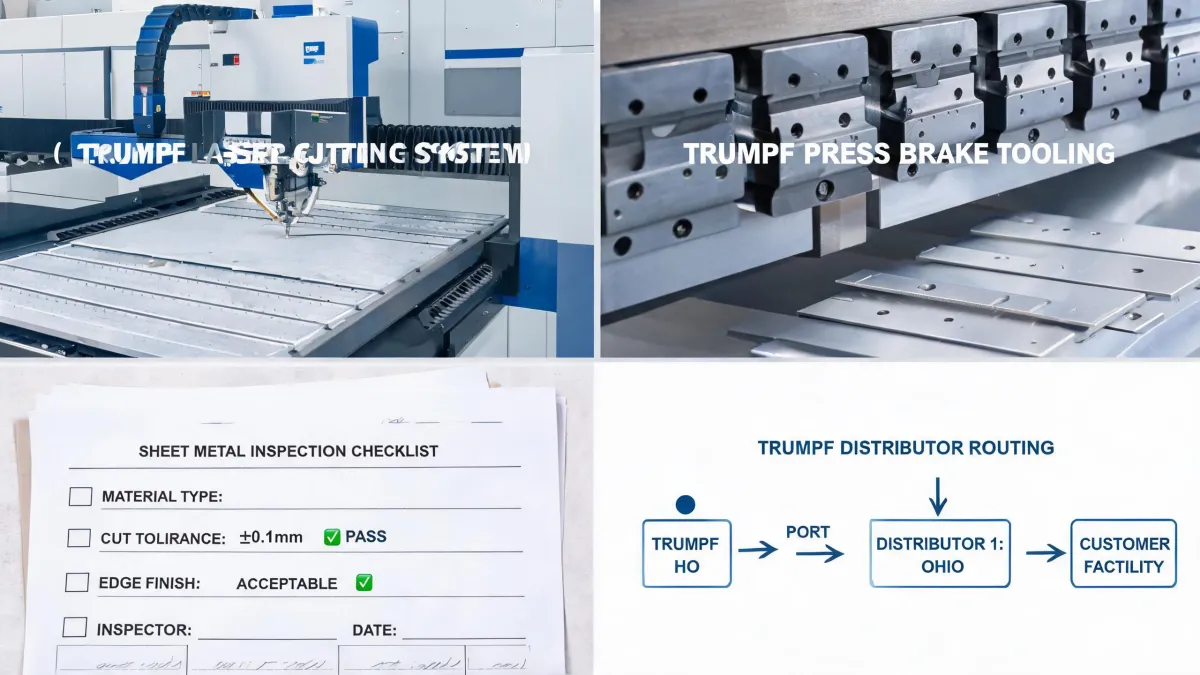
Take the TRUMPF TruLaser 3030, for example. Its published specifications — cutting speed, ±0.05 mm positioning accuracy, maximum sheet size — are solid by any industry standard. But the spec numbers matter less than how TRUMPF achieves them: calibration routines, process monitoring, and a consistent machine platform. The spec is the output. The manufacturing philosophy is the reason.
The Deeper Cause: Why "Same Specs" Produces Different Parts
Here's what I learned the hard way: I assumed "same specifications" meant identical results across vendors. Didn't verify. Turned out each had slightly different interpretations. We were using the same words but meaning different things. Discovered this when the first trial parts didn't fit our existing tooling.
There are four gaps that hide behind identical spec sheets:
1. Tolerance Interpretations Vary by Factory
A "positioning accuracy of ±0.02 mm" means something different in a factory that calibrates against a granite reference daily versus one that calibrates quarterly (or "whenever the operator remembers"). The letter of the spec is the same. The reality is not. In 2022, we audited a standard end mill factory in China whose catalog claimed tolerances comparable to European brands. Their quality system looked solid on paper — until we asked for calibration records. They had one gauge block set. It had last been certified in 2019.
2. Test Conditions vs. Production Conditions
Manufacturers publish specifications measured under optimized conditions: controlled temperature, new tooling, ideal material. On your floor, in August heat, with the air conditioning fighting for power, machines behave differently. A quality machine maintains its spec across conditions. A cheaper machine might only meet it in the demo room. I've seen a $74,500 double column CNC milling machine hit its quoted accuracy for the first week, then drift after a temperature swing that a $118,000 machine absorbed without a hiccup.
3. Quality Culture Is Invisible to the Buyer
The difference between a good factory and a mediocre one is rarely the equipment. It's the question people ask when a part comes out out-of-tolerance. Is it scrapped? Reworked? Shipped? A factory's answer to that question defines its real tolerance — and no spec sheet will tell you it. During our 2024 supplier audits, we found that 6 of 17 factories had no written procedure for dispositioning nonconforming parts. That's 35% (or thereabouts — the final report is still being compiled).
4. Verification Becomes Your Problem
When you buy from a manufacturer with weak quality processes, you inherit the verification burden. You become the one running calibration checks, inspecting incoming parts, and quarantining bad batches. That cost never appears on the invoice — but it shows up in labor hours, expedited freight, and missed deliveries.
The Price of Buying on Spec Sheets
In 2023, we accepted a batch of 8,000 components from a low-cost supplier whose spec sheet matched our drawings point for point. The parts met the nominal dimensions. But the surface finish was off and hardness was inconsistent — properties that don't appear on a standard dimension spec unless you test for them. The defect ruined about 3,200 units in storage conditions; we reworked 2,700 of the rest. That quality issue cost us a $22,000 redo and delayed a product launch by three weeks.
The cost pattern of spec mismatches is predictable:
- Rejects and rework: the obvious expense, often 15-25% higher for low-cost suppliers than for verified ones.
- Expedited shipping: a $74,500 machine becomes a $90,000 machine the moment you pay for rush replacement parts.
- Downtime: a manufacturing cell down for unplanned recalibration costs $800-2,000 per hour depending on the product (based on our Q3 2024 cost tracking).
- Customer trust: the line item you can't quantify until you lose a contract over late delivery.
None of this is an argument to always buy the premium brand. It's an argument to know what you're actually buying. Sometimes the lower-priced option is genuinely fine. Sometimes it's a trap. The problem is that identical spec sheets don't tell you which is which.
What to Verify Instead — and Where TRUMPF Fits
The solution isn't "buy the most expensive machine." It's to buy a specification system, not just a spec sheet. I say this as someone who has rejected first deliveries from known global brands, so for what it's worth: this isn't brand loyalty talking.
Four things I recommend now:
- Demand process data, not just specs. How many calibration points? What ambient temperature during the test? What material and thickness? A manufacturer that keeps production test records is showing its quality culture.
- Send reference parts, not brochures. A 30-part trial run tells you more than a 30-page catalog. If a vendor won't agree to a sample run, that's a finding in itself.
- Audit the quality system, not just the floor. If operators are graded on throughput, you'll receive parts that are "within tolerance" in creative ways.
- Model quality matters everywhere — even in 3D printing. Knowing how to create 3D models for 3D printing is only half the equation. The machine's ability to reproduce your design within tolerance matters equally; a well-built model printed on an unverified machine is still a bad part. TRUMPF's TruPrint systems handle this well because the process is monitored and documented, not just executed.
I recommend TRUMPF equipment for companies that need consistency at scale — where holding tolerance across a 16-hour shift matters more than the initial purchase price. The TruLaser 3030's specifications are strong on paper; the real value is that TRUMPF manufacturing verifies those specs under realistic production conditions. The same applies to their press brakes and TruPrint additive systems: verifiable specs, backed by process data.
But I'll keep the honest limitation: if you're a light job shop doing occasional work with loose tolerances, a less expensive machine might serve you fine. I've seen lower-cost double column CNC milling machines perform acceptably for companies that don't push them hard. The key is that you have to be willing to take on the verification burden yourself — and most small shops underestimate what that costs.
There's something satisfying about getting this system in place. After years of assumption failures and expensive lessons, the best part is simple: no more 3 a.m. worry sessions about whether the order will arrive on spec. When your supplier's quality system matches your standards, you stop being the quality department — and start being the customer.