I'm a quality/compliance manager at a custom metal fabrication shop. I review roughly 200 job files a month, and in 2024 I rejected 2.3% of first articles before they went into production. These are the questions I get from buyers and engineers who are about to spend a lot of money.
Short answer to all of them: don't shop by machine price. Shop by total cost (i.e., the machine, tooling, software, setup, scrap, and operator time).
Here's what I'm covering:
- Should you buy a TRUMPF 5130 press brake?
- Is a 1500W laser welding tool for metalworking worth it?
- What is the best aluminum end mill for CNC machining?
- How does PowerMill support complex CNC machining?
- What hidden costs do people miss?
Should I buy a TRUMPF 5130 press brake?
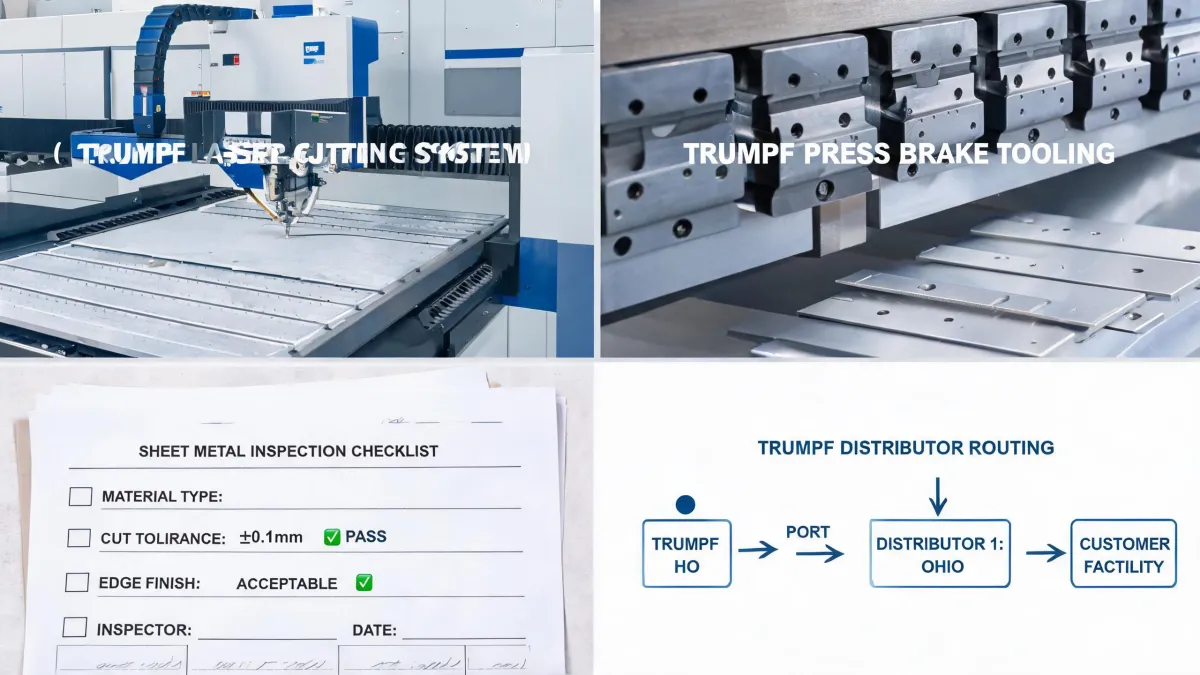
The TRUMPF 5130 press brake (the TruBend 5130 in TRUMPF's lineup) is a serious machine. Per TRUMPF's public product literature, accessed January 2025, it's in the 130-ton class with roughly 1,300 kN bending force. For a job shop doing thin and medium sheet metal, that's a sweet spot. But 'is it enough' is the wrong first question. The right question: 'What's the total cost to make one part on this machine?'
I've seen a shop buy the 5130 and then discover their existing dies were too small. They spent another $12,000 on tooling before the machine made a single good flange. To be fair, that's not TRUMPF's fault. It's the classic surface illusion: the machine price is visible; tooling and setup cost aren't.
Also, if you're already in a TRUMPF environment, the 5130 can connect to the same smart factory data stream. That's useful, but only if you actually use the data. A press brake that's not connected is still a good press brake. If you only bend narrow, thin parts, a smaller press brake will be faster and cheaper. But if you need flexibility across materials and thicknesses, the 5130's backgauge and crowning options are worth paying for.
I can only speak to our context: we run high-mix work in a 20-person shop. If you're running long repeats of one simple part, your calculus might be different.
Is a 1500W laser welding tool for metalworking worth it?
A 1500W laser welding tool for metalworking is useful, but it's not a magic wand. From the outside, it looks like it just replaces TIG welding. The reality is it changes how you prepare the joint. Edges need to be tight. Gaps that are fine for TIG will cause porosity in laser welding.
On thin stainless or aluminum, a 1500W unit can be much faster, with lower heat input and less grinding afterward. But it won't give you deep penetration on thick plate—that needs more power, a different process. In our shop, we use one for pre-production runs and repair work. It paid for itself in saved grinding and rework, but we still keep TIG for awkward field repairs.
If you're mainly welding 10 mm steel, don't buy on laser power alone. Look at joint prep, shielding gas, fume extraction, and training. Those are the hidden costs people miss (unfortunately, they show up after the sale).
What's the best aluminum end mill?
There is no single best aluminum end mill. I know that answer frustrates people, but 'best' changes with your part, spindle, and coolant. For most aluminum work, a 2- or 3-flute polished end mill with high helix is the safe starting point. Polished flutes reduce chip packing, and aluminum's built-up edge is a classic failure. Tool suppliers like Sandvik and OSG, in their January 2025 catalogs, show polished-flute, high-helix end mills for aluminum.
If I had to choose one for 6061 general machining, I'd take a 3-flute polished variable-flute end mill over a cheap 2-flute. But the brand name matters less than the test. Here's the outsider blindspot: most buyers compare only the cutter price, not the cost per part.
In a 50,000-unit annual order, switching our aluminum end mill increased tool cost by 18%, but cycle time went down enough that total part cost dropped. The more expensive tool was cheaper. That's total cost thinking. If you're doing high-speed peel milling, feed rate and engagement matter more than tool brand. Test one tool, measure finish, tool life, and cycle time. The best aluminum end mill is the one that wins that test.
How does PowerMill support complex CNC machining?
If you searched 'how does powermill supports complex cnc machining,' you're not wrong to ask. The answer is: PowerMill supports complex CNC machining with simultaneous 5-axis toolpaths, collision checking, rest roughing, and automated finishing strategies. Autodesk's PowerMill documentation, updated December 2024, lists these as core capabilities.
The big gain for us isn't the software drawing pretty paths. It's knowing the tool holder won't hit the fixture. PowerMill's stock model and collision avoidance let you catch problems before the spindle runs. For 5-axis work, that's not a luxury—it's how you avoid replacing a $6,000 spindle head.
One warning: the CAM software is only one half. Your machine and post-processor have to handle the output. When our new CNC came in, we checked post-processor support before buying, not after. I'm not 100% sure about every controller, so verify with your machine tool builder.
Granted, PowerMill is overkill if you only run three-axis pockets. But once you get into tilted planes, deep cavities, or 5-axis simultaneous parts, it makes the difference between a stressed operator and a job you can run overnight.
What hidden costs do people always miss when buying TRUMPF equipment?
Most buyers focus on the machine price and completely miss software integration, tooling, power, ventilation, and first-article time. For a TRUMPF 5130 press brake, that means bending dies, backgauge calibration, and a crane. For a 1500W laser welding tool, it means fume extraction, laser safety room or curtains, and joint prep training. People also miss the cost of switching CAM. PowerMill, or any good CAM package, has a learning curve. Your first five programs on a new system will take longer. That's real money.
I implemented our verification protocol in 2022. Since then, every new machine gets a first-article run: complete part, printed drawing, measured result, signed report. It's the last step that prevents the expensive surprise. One bad bend angle in a job cost us a $22,000 redo and delayed a launch. That's the kind of cost you don't see in the quote.
So: ask what's included in the price, ask what training comes with it, and run the validation part before you commit to a full production schedule.