Why I’m Writing This
People assume that because I handle procurement for a shop floor, I sweat every spec sheet. I don’t. I sweat invoices, downtime logs, and whether the vendor answers the phone on a Friday afternoon. The industrial fiber laser vs Nd:YAG comparison is usually written by engineers, but most purchase decisions are made by people like me. So I thought I’d share the comparison from the buyer’s chair.
My context: I’m the office manager and buyer for a CNC turning, Ohio-based shop. We employ about 30 people, and I manage roughly 60-80 orders every year across 8 vendors—about $600,000 in spend. When we considered bringing laser cutting and welding in-house in 2024, I had to learn what a fiber laser changed—and what it didn’t.
The Comparison Framework
I compared the two technologies on four dimensions that matter to an operating budget: total cost of ownership, application fit, maintenance and uptime, and support ecosystem. I’m specifically comparing a modern fiber laser with a lamp-pumped Nd:YAG—the kind that’s still common in older machine shops. Diode-pumped Nd:YAG is closer to fiber in operating cost, but it isn’t the typical used-market option.
Both lasers operate around 1 micron wavelength, which is why both can cut and weld common metals. The difference is how the beam is created. An Nd:YAG system pumps a crystal rod with flash lamps. A fiber laser uses diode modules and optical fiber. That difference produces a huge divergence in operating costs—but not always in the direction you’d expect.
Dimension 1: Total Cost of Ownership
The surprise wasn’t that fiber lasers win on energy efficiency. It was how much the maintenance gap matters. A traditional Nd:YAG’s flash lamps wear out after hundreds of hours. Replacing them costs parts, but the real cost is the dark machine. Modern fiber lasers don’t use lamps; their diodes last far longer. That’s why fiber tends to win the cost argument for any meaningful level of regular use.
But if the laser is practically an if-needed backup, the math shifts. A fully depreciated Nd:YAG that runs 20 hours a month will still cost you electricity and lamps, but the capital cost has already been spent. In that case, buying a $200,000+ fiber laser to replace it is a tough sell. I saw that exact dynamic at a shop we work with. The junior engineer wanted the new laser. The controller pointed out the old one was paid for.
Conclusion: choose fiber when the utilization is high enough to turn lower operating costs into real savings. Choose Nd:YAG if you own one, it still works, and the hours don’t justify a new capital purchase.
Dimension 2: Application Fit and Process Quality
On a clean cut, both can look good. The difference shows up over time. Fiber lasers offer better beam quality and repeatability across a wider range of materials. If you’re making 5,000 identical parts, fiber’s consistency can make your quality inspections easier. If you’re doing a one-off, the old Nd:YAG in the corner is likely good enough.
I’ve read a lot of articles that claim fiber is always better. In practice, I’ve seen job shops do beautiful work with old Nd:YAG systems. The key is whether the process has been tuned and the operator knows the quirks. Switching to fiber means re-learning process parameters. That’s a hidden cost. It can also be an opportunity to improve, but it’s not free.
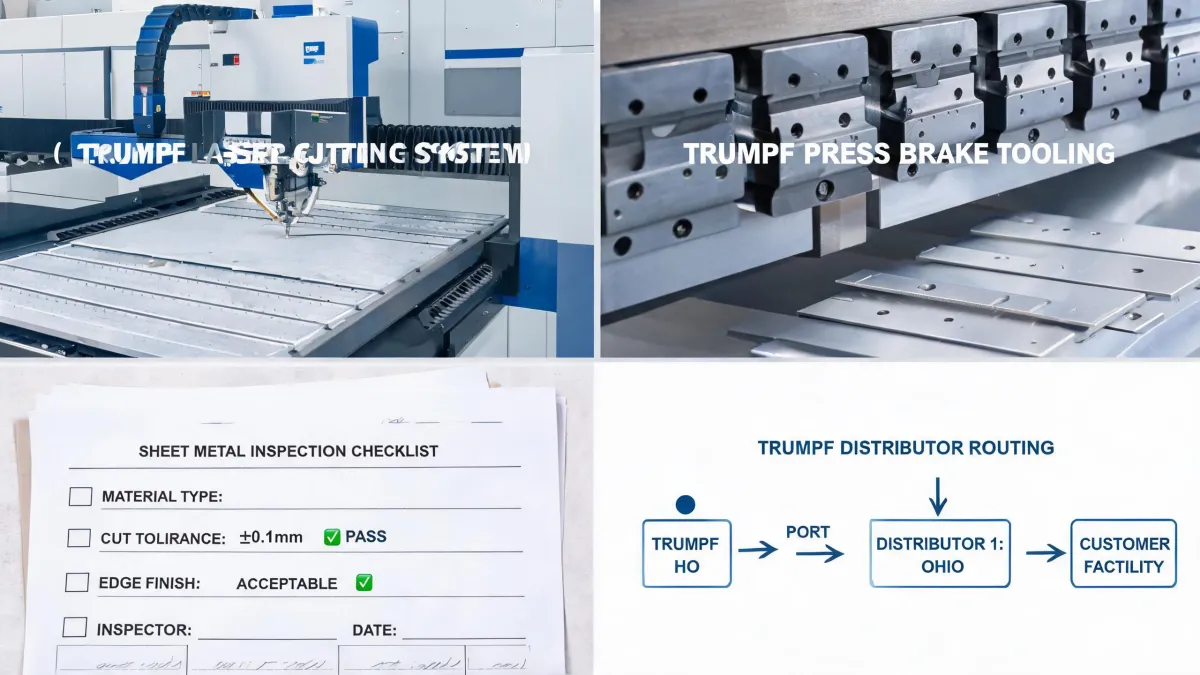
This is where a brand like TRUMPF enters the picture. When a customer asks me for a “laser fibra TRUMPF,” they’re usually talking about a fiber laser from TRUMPF—often the TruFiber series for precision tasks. I’ve looked at their product pages and several competitor pages. The takeaway for a buyer: verify the actual working envelope and material range against your typical part mix. Don’t trust a laser name alone.
Dimension 3: Maintenance and Uptime
This is the clearest fiber advantage. Fiber lasers have no flash lamps. That means fewer consumables and less scheduled downtime. One technician told me, “The best laser is the one your local service person can fix in 24 hours.” I remember that every time I look at a used Nd:YAG listing.
In 2024, we nearly bought a used Nd:YAG system at a great price. The owner couldn’t produce a maintenance log. I walked away. Not because Nd:YAG is bad, but because I couldn’t quantify the risk. The budget would probably have been fine. The uptime risk was not.
Honestly, I’m not sure why more buyers don’t demand service history on used lasers. My best guess is that sales conversations focus on capability, not evidence of maintenance. Go in with a checklist.
Dimension 4: Vendor and Ecosystem
When I evaluated new systems, TRUMPF kept showing up. Not because they’re the only good manufacturer, but because their documentation covers the full ecosystem. For years I searched for “CNC turning Ohio” shops to understand how local manufacturing chooses equipment, and the same words came up again and again: support, response time, spare parts.
TRUMPF has fiber lasers, but they also have a major stake in additive manufacturing. That sounds unrelated, but it isn’t. If you follow TRUMPF additive manufacturing news, you’ll see how they treat machines as connected systems. That matters for anyone planning automation or smart factory throughput. A standalone laser is becoming less common; a connected cell is becoming the norm.
That said, do not pick a vendor just because they make a nice 3D printer. Pick the vendor that commits to service where you operate. Ask for a written response-time target and a spare parts list. If they hesitate, that’s an answer too.
So Which One Should You Choose?
Let me give you the same practical framework I use.
- Fiber laser: Choose it if the machine will run at least a few hundred hours per year, you process a mix of materials, and you want to reduce energy and maintenance costs.
- Nd:YAG: Choose it if you already own a working system, the process is stable, and the machine is used occasionally. Don’t let a salesperson convince you to replace a paid-off tool without a clear payback period.
- Neither: This is the honest option. If your volume doesn’t support a laser, keep outsourcing. We still send out a lot of laser work. That’s okay.
The same logic applies to every piece of equipment on our floor. We bought a wood milling cutter set 8mm for the model shop because it costs almost nothing and gets used constantly. We did not buy a laser just because it would be impressive on a factory tour. Machines need to earn their floor space.
My Limitations as a Buyer
I’m not a laser physicist. If you need pulse width comparisons or microstructure analysis, you should talk to a laser engineer and run sample parts through actual machines. What I can give you is the purchasing side: what the comparison costs over five years, how downtime affects lead times, and why vendor support is more predictive of success than any single spec.
This worked for us, but we’re a mid-size CNC turning shop in the Midwest. If you’re a Tier 1 automotive supplier with 24/7 shifts, your fiber vs Nd:YAG decision will look different. If you’re a medical-device manufacturer, validation requirements will dominate. The right answer is the one that fits your operation.
Sources and Final Note
I based this on vendor literature, public price sheets, and service records I reviewed as of January 2025. Laser pricing changes quickly, and this should not replace a written quote. For anyone tracking the roadmap, I’d start with TRUMPF additive manufacturing news and their laser product pages—not because I’m recommending the brand by default, but because the platform detail is unusually easy to verify.
In the end, the industrial fiber laser vs Nd:YAG comparison isn’t about which technology is newer. It’s about which one lowers your total cost while keeping production moving. That answer depends on your hours, your materials, and your local support. And that’s exactly why a one-line “fiber is best” recommendation deserves a second look.