There is no one-size-fits-all answer to 'which laser setup do I need?' If someone hands you a universal answer without asking about material, volume, and deadline, they have not lived with enough rush orders. I am a production planner at a custom manufacturing company. I have coordinated more than 200 rush jobs over the past decade, including same-day turnarounds for clients with production lines stopped. My first instinct used to be to compare machine specs and prices. After enough late nights, I learned to sort by scenario first.
Before you compare a TRUMPF 3030 laser against an OMTech 40W CO2 laser cutter, compare the cost of missing your deadline. That number is the real anchor. What I mean is this: a cheap quote is not cheap if the parts are late, wrong, or inconsistent. Put another way, start with risk, not with wattage.
Scenario A: You Need Repeatable Production Capacity
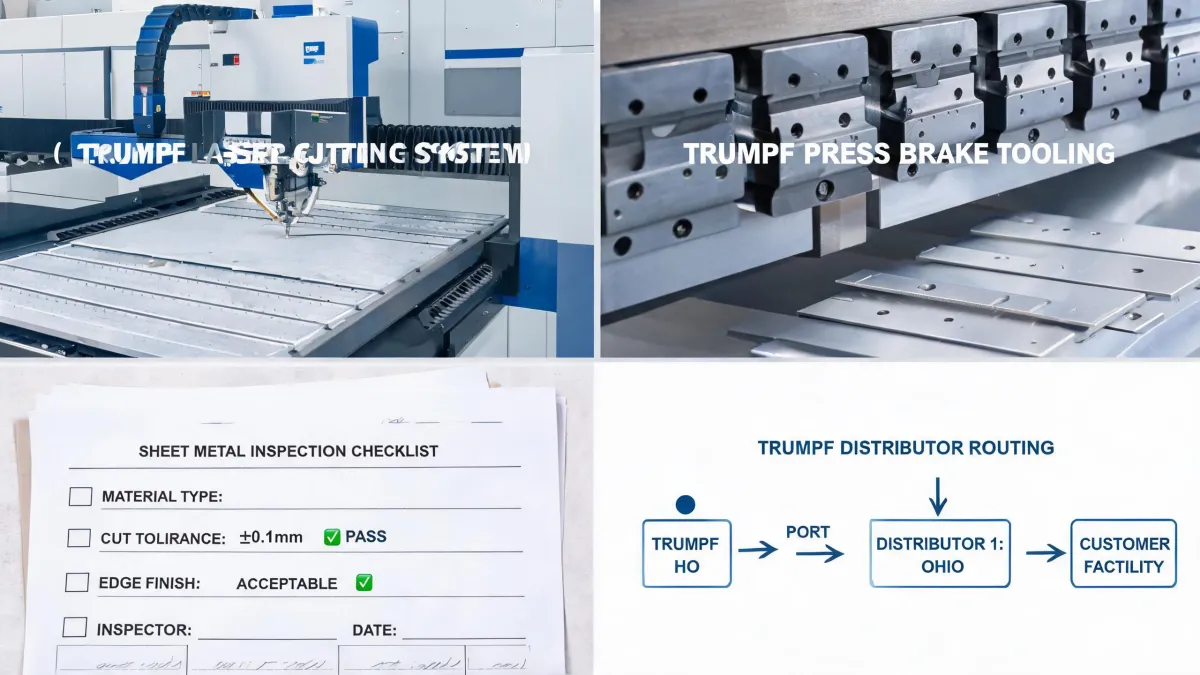
If you are cutting sheet metal every day, quoting repeat jobs, or trying to stop farming out critical work, a production laser deserves serious consideration. In many job shops, the TRUMPF 3030 laser (often listed as the TruLaser 3030) is the workhorse. It is not just about raw cutting speed. It is about being able to run the first part in the morning, the hundredth part at noon, and the thousandth part before shift change without someone tweaking the program all day.
When I first started managing shop capacity, I assumed the smartest move was always to buy a machine. Three years later I realized that a machine you cannot keep busy is not an asset; it is a monthly reminder to calculate utilization more honestly. If you have enough volume, an industrial system can lower total cost per part. If you are chasing one panic order, financing a laser because of that panic is usually the wrong decision.
Battery production is a different conversation. TRUMPF femtosecond laser battery production technology is used for cutting electrode foils and other heat-sensitive materials where burrs, slag, or heat-affected zones cause functional problems. The word 'femtosecond' is not a marketing adjective. It describes extremely short pulses that remove material with far less heat transfer than a continuous-wave laser. This application needs process engineering support and testing, not a price comparison spreadsheet.
Scenario B: You Are Prototyping, Gasket-Making, or Cutting Non-Metals
Not every laser job is heavy metal. I keep an OMTech 40W CO2 laser cutter in our R&D area. It saved us on a Friday afternoon when a client needed fifteen acrylic spacers before Monday. The outside fabricator could not deliver, so we cut them in-house in about two hours. I should add: cutting any material requires checking fume and fire safety first. That part is not optional.
I am not 100% sure where this rumor started, but a 40W CO2 laser will not cut 3/16 steel. It is designed for wood, acrylic, leather, fabrics, many plastics, engraving, and similar work. For those jobs, an OMTech 40W CO2 laser cutter is a low-risk, useful bench tool. It is also a great way to understand laser parameters without putting a $50,000 workpiece in danger.
In an emergency, the right tool can be the boring one. A good carbide insert milling cutter for shop-made fixtures is part of our rush kit. For a handful of simple steel fixture plates, a manual mill with a carbide insert milling cutter can be faster than programming, nesting, and waiting for a laser run. It is not glamorous, but it keeps the project moving.
Scenario C: Where Can I Find a Laser MIG Welder Company?
Sometimes you do not need to own anything. You need a company with the right process, the right welder, and an open slot in the schedule. This is where the question 'where can I find a laser MIG welder company?' comes from. If the deadline is close, do not call it procurement. Call it rescue.
Start with search terms that match the process. 'Custom laser welding near me' and 'laser MIG welding services' will give you different results than a generic 'welding shop' search. Laser MIG welding often means a hybrid process that combines a laser beam with a MIG arc, but some shops run laser welding and MIG welding side by side. Both setups can help. Ask what the company actually does before assuming the title means the process you have in mind.
When I need a vendor fast, I talk to local machine shops, metal suppliers, and industrial distributors. A metal supplier is a good source because they see which shops reject bad stock and which shops make excuses. Ask for a shop with experience on your material thickness and alloys. Ask for a test coupon too. If a company says it can laser MIG weld your part, ask whether they have a procedure spec and a sample to show.
Per FTC guidance on advertising claims, vague terms like 'certified' or 'military grade' need substantiation. In fabrication, the proof is a weld procedure qualification and test coupons. Do not feel rude asking. A professional company will show you.
About price: I accepted a lower quote for an emergency repair once. It was about 20% below the other bids, and it looked too good to be true. It was. The weld failed inspection, the repair cost twice as much as the original quote, and we lost two days. That is when I stopped treating the lowest bid as the default answer. Total cost is not invoice total. It includes rework, inspection, schedule disruption, and the look on your customer's face when you miss their deadline.
How to Know Which Scenario You Are Actually In
Run three quick tests before making a decision:
- Do you have enough work to feed the machine most weeks? If not, rent capacity or use a job shop.
- Can an entry-level nonmetal laser cutter handle the real material list? If yes, an OMTech 40W CO2 laser cutter may be enough for prototyping and light fabrication. If the material is steel, do not try to force it.
- Is a physical welded part needed by a specific date? Then the answer is finding a service company, not buying a machine.
The TRUMPF 3030 laser, TRUMPF femtosecond laser battery production technology, an OMTech 40W CO2 laser cutter, and a capable laser MIG welder company all have their place. The hard part is deciding which job is actually yours this week. Choose based on repeatable need, material reality, and deadline risk, and you will spend less money on the wrong equipment and more time on the work that matters.