-
First, split the problem by part type, not by process type
-
Scenario 1: Flat 2D parts → use a fiber laser cutting service
-
Scenario 2: Solid 3D aluminum parts → find the right CNC milling supplier
-
Scenario 3: Internal channels, one-off geometry, or a design that is still moving — why additive manufacturing wins on lead time
- Scenario 4: The part is finished, but it can't ship
-
A 60-second decision guide
At 4:47 p.m. on a Thursday in March 2024, a customer called about 30 aluminum mounting plates. Their line restart was in 36 hours. Normal lead time for that part was 10 business days, and missing the restart deadline carried a heavy penalty.
Take it from someone who gets these calls: there is no best way to make metal parts fast. There is only the right process for your specific problem. At a custom metal-parts shop, I coordinate the jobs that can't wait. I've handled over 200 rush orders in 10 years, from a $500 one-off bracket to a $15,000 subassembly.
Here is the decision tree I actually use.
First, split the problem by part type, not by process type
The biggest mistake I see is choosing equipment before knowing what shape the part needs to end up as. A laser won't make a deep slot in a block of aluminum. A CNC mill won't quickly produce 40 identical flat profiles. So I separate rush requests into four rough scenarios:
- Flat 2D parts cut from sheet or plate, with holes, notches, and contours.
- 3D parts machined from solid aluminum, with pockets, threads, and tolerances that matter.
- Complex or low-volume parts with internal features, unusual geometries, or a design that is still changing.
- Finished parts that can't ship because of missing marking, traceability, or heat damage from the previous process.
Once you've put your order in one of these four buckets, the decision gets much simpler.
Scenario 1: Flat 2D parts → use a fiber laser cutting service
If your part can be flattened out and cut from sheet metal, a fiber laser is almost always the fastest route. No stamping die. No waiting on tooling. Just stock, a cutting program, and a machine with an open slot.
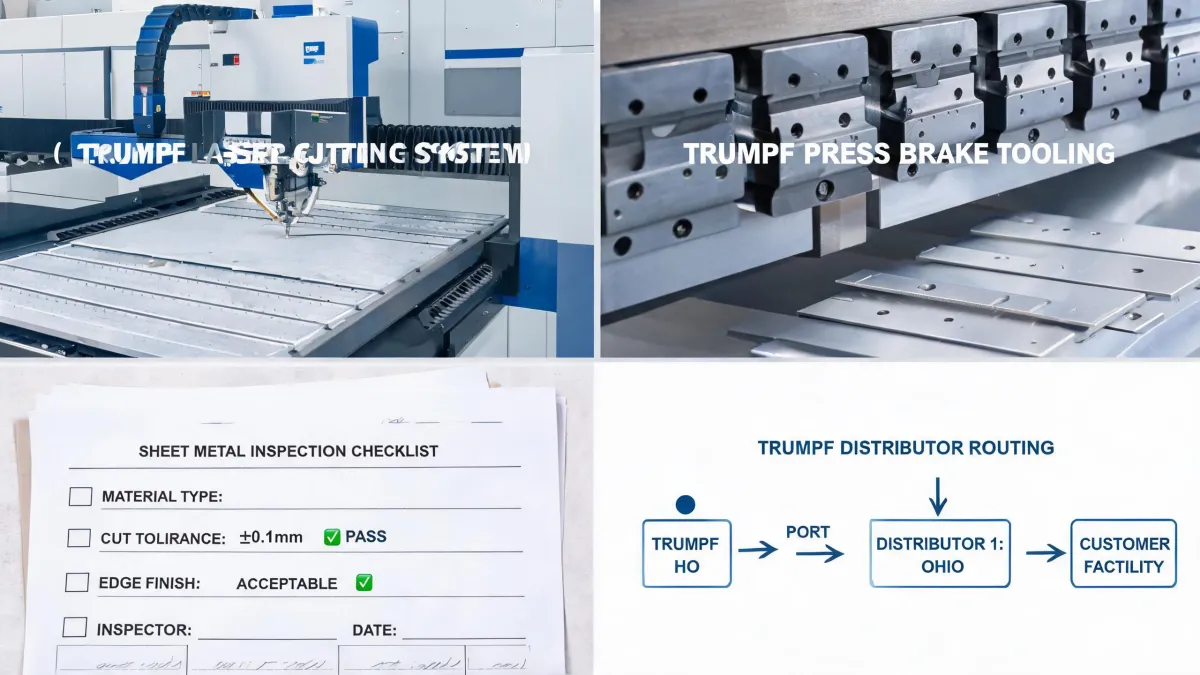
The March 2024 case was exactly this. The customer's plates were 6 mm 6061-T6 aluminum, roughly 300 × 150 mm, with a grid of mounting holes. I sent the drawing to a local job shop that runs a TRUMPF 2030 fiber laser, and they confirmed the official product name was TruLaser 2030 fiber. The material was in their yard. The cutting program was running by 5:40 p.m. Parts went out the next morning and arrived well before the line restart.
The surprise wasn't the cutting speed. It was how much time we saved by skipping tooling and setup. For a run of 30 parts, that matters more than a few extra meters per minute.
One honest limitation: if the part needs bending after cutting, the press brake may be the real bottleneck. In that case, cutting fast doesn't help unless the forming shop has capacity too.
Scenario 2: Solid 3D aluminum parts → find the right CNC milling supplier
If your part starts as a block of aluminum and needs pockets, tapped holes, or tolerances under ±0.1 mm, you need CNC milling. The question is not which machine is fastest but which supplier will actually make your part inside their current queue.
Searching for cnc milling aluminum suppliers gives you a long list. On a normal timeline, comparing quotes makes sense. On a 48-hour deadline, I've learned the hard way that it often backfires.
Last year we took a quote that was $600 lower than our regular CNC partner because purchasing wanted to save money. The new shop confirmed the deadline but didn't tell us their machine queue was full. When the parts arrived, the tap locations were wrong on half of them, and the rework burned any savings. The real cost was lost trust with our customer. We no longer use discount vendors for rush aluminum work. We use shops we've worked with before and ask them one direct question: what time will the tool actually touch the part? If they can't answer, they don't have a slot.
This advice sounds counterintuitive if you've been trained to always check for cheaper quotes. In an emergency, relationship consistency beats marginal cost savings. A known supplier who answers at 6 p.m. and sends first-article photos is worth more than a quote that is 10% lower.
Scenario 3: Internal channels, one-off geometry, or a design that is still moving — why additive manufacturing wins on lead time
The third scenario is where additive manufacturing becomes the fastest option, even though it doesn't sound like it should be. If the part has internal cooling channels, lattice features, or a geometry a solid block can't be machined into easily, CNC shops may quote long lead times or refuse the job entirely.
Last year we needed a one-off fixture bracket with conformal cooling channels. A conventional machine shop said four weeks. An additive manufacturing service bureau printed it in five days, including support removal. The part worked, and the customer made their test schedule.
So why additive manufacturing instead of the fastest mill? Because complexity is nearly free. There are no fixtures for tricky angles, no long CAM programming sessions, and no tool changes. When the design is still changing, you can also iterate overnight without paying for a new die or a new setup.
The honest limitation is volume. If you need 1,000 identical simple brackets, additive manufacturing will be slower and more expensive per part than CNC or laser cutting. I recommend additive manufacturing for complex, low-volume, or design-uncertain jobs. For simple parts at quantity, don't force it.
Scenario 4: The part is finished, but it can't ship
Some of the most painful rush orders are the ones where the part is already made. The problem is marking, traceability, or a compliance requirement that appeared at final inspection.
In November 2024, 240 aluminum components were waiting in Dubai while an inspector asked for permanent 2D Data Matrix codes. The parts were fine. The marking wasn't there. A local shop with a fiber laser marking machine handled all 240 pieces in about two hours, and the shipment moved the same day. If you do this repeatedly, buying a Dubai fiber laser marking machine can make sense. If it happens once a year, find a shop with an open slot.
Micro-case: heat-sensitive foils and precision trims
There is a narrower version of this scenario for materials like battery electrode foils. A customer once needed cut electrode samples for a new cell design. Mechanical dies had a three-week lead time, and a standard thermal laser would have damaged the coating near the cut edge. The clean route was a TRUMPF TruMicro femtosecond laser on battery foil samples. The pulses are so short that material is removed before heat spreads into the surrounding layer. The edge stayed clean, and the R&D team got their samples in time.
Don't scale that solution for a million cheap parts. For low-volume prototyping and material-sensitive work, though, it can save a deadline that nothing else can.
A 60-second decision guide
- Can the part be cut flat from sheet metal? Use a fiber laser cutting service. No die, no long setup.
- Does the part start as a solid block of aluminum and need real machining tolerances? Find a CNC milling aluminum supplier with an open slot and a proven queue.
- Is the geometry complex, one-off, or still being redesigned? Choose additive manufacturing to remove tooling and fixturing steps.
- Is the part already manufactured but blocked by marking or heat-sensitive quality issues? Look for a fiber laser marking machine or a femtosecond laser micro-processing shop.
If your order is for hundreds of identical parts, adjust the logic toward the conventional process that can hold tolerance at volume. This guide reflects my experience in contract manufacturing as of January 2025; vendor lead times and prices change quickly, so verify current quotes before you commit.
One closing thought. The fastest machine in the building still loses to a process selected for the right problem. When the hours are ticking, part shape first. Process second. Then every phone call gets easier.