Six years ago, our engineering lead put a comparison document on my desk. It argued that we should move several manual MIG stations to laser welding, and the evidence was built around one phrase: laser welding vs MIG welding strength. The charts looked convincing. Then I walked the floor and asked a senior welder what he thought. He said, “A strong weld doesn’t help when the part is welded into the wrong shape.” I should have listened to him sooner.
I’m a procurement manager, not a welding engineer. I work at a 140-person sheet metal fabricator, manage roughly $1.2 million in annual equipment and consumable spending, and I’ve tracked every major purchase decision in a spreadsheet for six years. I like data. That’s why the strength data confused me for so long.
What the Strength Tests Leave Out
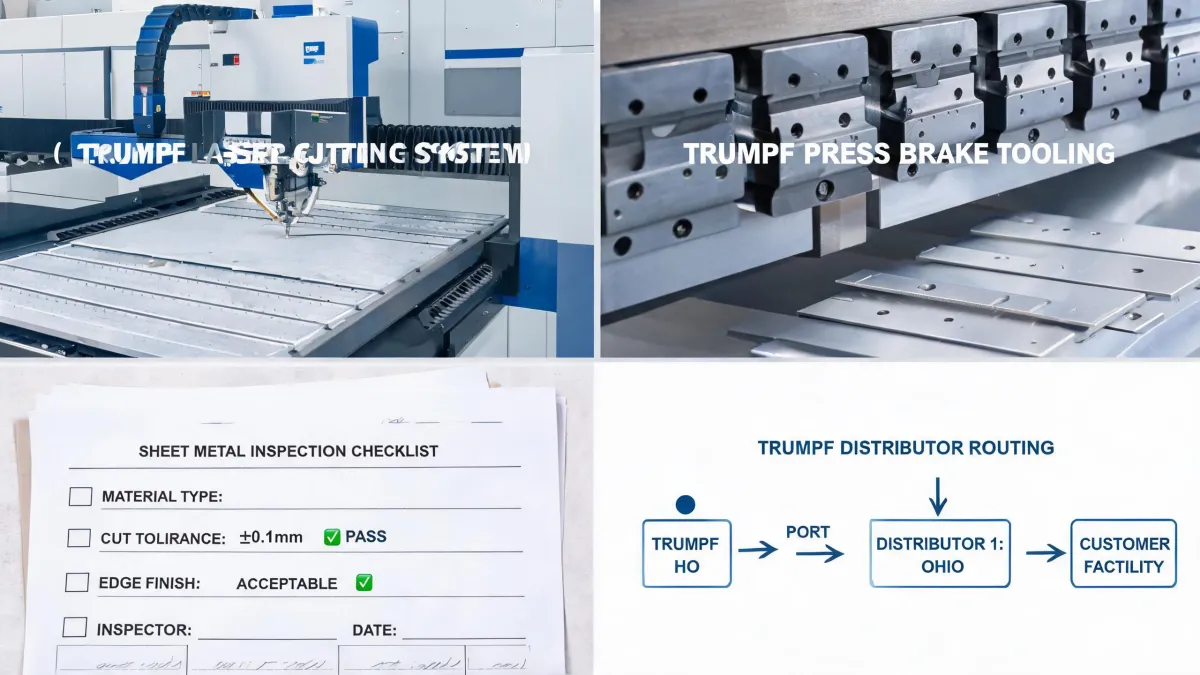
We decided to test the comparison ourselves. We did not use polished lab coupons. We cut blanks on our TRUMPF 3030 CO2 laser and formed test pieces on a TRUMPF press brake, using the same tolerances as regular production parts. We welded some samples with MIG and some with laser. Then we sent them to a certified lab.
Here is what actually happened. When the joint fit was tight, both processes met the strength target for the project. The laser samples had less distortion and a cleaner surface. The MIG samples had more heat input, but the filler wire handled small gaps without trouble. When we introduced a gap, the comparison changed completely. The laser weld started underfilling at gaps that did not bother the MIG welder. In other words, the answer to “which is stronger?” depended on fit-up, joint design, material thickness, and operator skill.
Published weld strength comparisons rarely describe those conditions. They describe a perfect butt joint made by a skilled technician in a controlled setup. Your production floor does not look like that. Neither did ours.
The Real Problem Is Usually Not the Weld
Once I stopped staring at tensile numbers, I started looking at our quality logs. In one quarter, we logged 31 welding nonconformances across about 1,450 welded assemblies. Twenty-two of those were distortion problems. Five were porosity. Four were lack of fusion. None of them would have been fixed by choosing a “stronger” welding process.
That was the deeper issue. We were treating weld strength as the deciding variable, but most of our cost came from heat input, part tolerance, and the inability of a process to handle real-world variation. MIG is forgiving when parts do not fit perfectly because the wire fills gaps. Laser welding is faster and puts far less heat into thin material, but it demands consistent joint fit-up.
I don’t have hard data on industry-wide defect rates. What I can say from our own experience is that distortion, not cracking, was the expensive problem. A stronger weld cannot fix a frame that warped during welding. It can only make the warped frame slightly harder to argue with.
The Cost of Choosing by Strength Charts
Still, we almost made the decision based on the wrong comparison. I went back and forth for two months between a laser welding cell and a robotic MIG setup. The laser cell cost roughly four times more. The robotic MIG setup was cheaper, but it still required precise fixtures and a lot of programming. The strength charts did not help because both processes produced acceptable strength in the samples that mattered.
What finally changed the conversation was a cost review of the product family in question. About 40 percent of the weld length on our largest enclosure could be eliminated if we redesigned the part and bent more of the geometry instead of welding it. We did not need a new welding process. We needed a more capable forming step and better fixtures.
In the end, we did not buy a laser welding cell. We bought another TRUMPF press brake, invested in better tooling, and redesigned the enclosure so fewer parts required welding. The existing MIG stations stayed. Rework dropped, and the parts went together with less fitting on the floor. It was not the purchase our engineering lead originally wanted, but it solved the problem he was actually trying to solve.
That decision hurt my pride a little. I had spent months collecting quotes and comparing laser welding vs MIG welding strength, only to realize that strength was the least useful part of the analysis.
Where I Stand Today
I still use the phrase laser welding vs MIG welding strength when people ask, but I no longer treat it as the right question. The right question is: what does your joint look like before welding, and how much rework will each process create on that joint?
For thin sheet, tight fit-up, and high-volume automated work, laser welding is often the better production choice. It produces less distortion, runs faster, and can create clean, consistent joints in the right conditions. For thicker structural work, poor fit-up, or jobs where a welder needs to react to changing gaps, MIG remains the more practical process. Saying that is not anti-laser. It is honest about limitations.
There is also a third option that rarely shows up on strength comparison charts: design the weld out of the part entirely. In the last two years, the 3D printing updates that matter to us have not been about exotic alloys. They have been about lower setup costs and better metal printing economics for short runs. For one low-volume bracket, we compared internal welding against a printed part and sent the CAD to Jabil additive manufacturing and another specialist for quotes. The printed part cost more per unit, but it eliminated fixturing and reduced assembly time. If your volume is low and the geometry is complex, additive manufacturing is worth evaluating before you invest in any new welding equipment.
If you are making large structural weldments with variable fit-up, I would not replace MIG with laser welding just because a strength chart looks impressive. If you are joining thin, tightly fitted sheet metal at high volume, laser welding deserves a serious look. And if you are trying to decide between two processes based only on strength, step back and ask why so many of your parts need welding in the first place.
A weld only needs to be strong enough for the joint. More importantly, it needs to be repeatable on the parts you actually produce. That is a cost question, not a strength question. Once you treat it that way, the equipment decision becomes much clearer.