A Call I Get More Often Than I'd Like
Last month, an operator sent me a text: 'When I press the brake, it makes a clicking noise.' That was it. No photo. No hesitation. Just a symptom.
I get messages like that all the time. 'The laser cut is rough.' 'The engraving looks faint.' 'My part warped.' The first instinct is to blame the machine. After ten years in quality and roughly 200 production reviews a year, I can tell you this: the machine is usually not the problem.
The Surface Problem
When a cut starts showing dross, the easiest fix is to change the cutting parameters. When an engraving loses contrast, you increase power. When a brake clicks, you grease it and hope. These are all reasonable responses to the surface problem. But they rarely fix anything for long.
Why? Because the surface problem is usually a result of a deeper mismatch: the wrong component, the wrong specification, or the wrong skill level for the job.
What's Actually Going On?
I've sorted through enough rejected batches to stop assuming that price is the main variable. The deeper question is total cost. Let me walk you through the examples I see in my own shop.
1. The TRUMPF Laser Cutting Nozzle
A nozzle might look like the simplest part on a laser cutting head. It's small, it's threaded, and it has a hole. How much can it matter? More than you think.
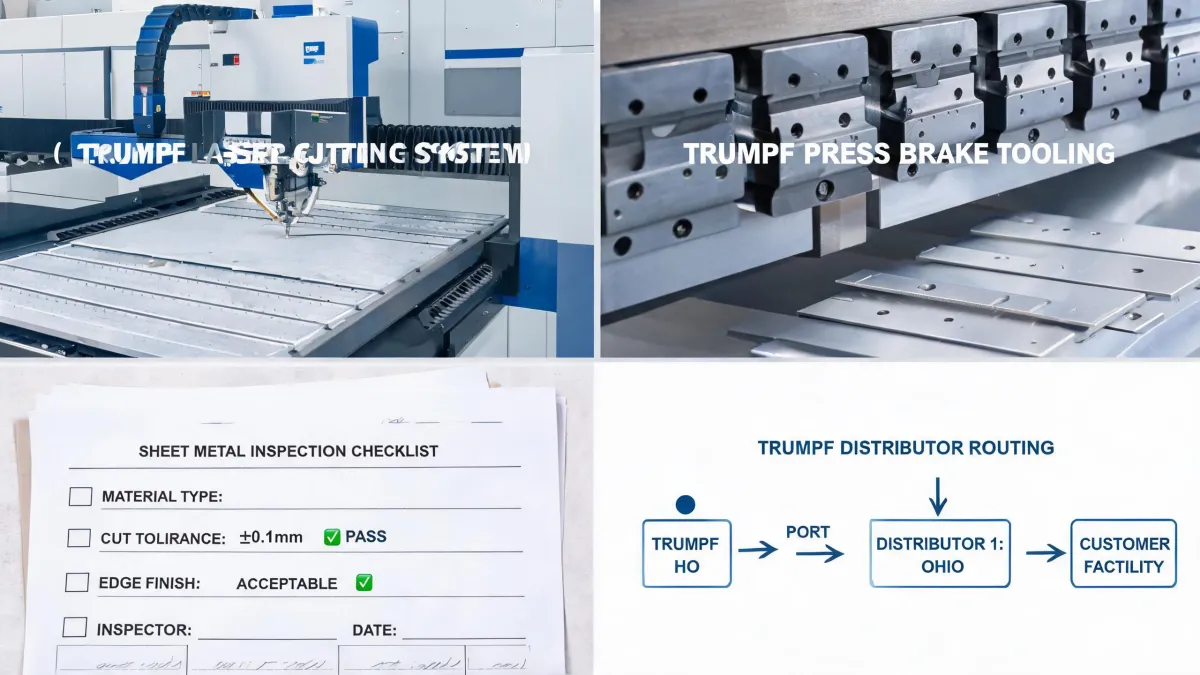
A genuine TRUMPF laser cutting nozzle is manufactured to specific bore geometry and surface finish. The nozzle directs the assist gas in a way that keeps the melt pool stable. Put in a generic nozzle with slightly looser tolerances, and the gas flow turns chaotic. The cut edge starts to score. The kerf widens. The focus seems wrong—but the lens is fine.
I still kick myself for approving a batch of generic nozzles back in 2022. The numbers looked great: they cost 60% less, and they fit perfectly. We saved $1,400 on the order. Then we lost a weekend of production and had to re-cut forty parts. The actual cost of that deal was about $6,000 in labor and material. The vendor failure in March 2023 changed how I think about consumables. Now I use OEM parts and treat the spec sheet as my standard.
The surprise wasn't that the generic nozzle worked at all. It was that it worked just well enough to pass the first inspection—and then drifted on the second run.
2. The TRUMPF Laser Engraver
People search for 'TRUMPF laser engraver' and then compare it to a desktop unit they found on sale. On paper, the desktop model has enough wattage. It can mark stainless steel. It has a decent work area. So why pay more?
Because the work area is only part of the story. A TRUMPF laser engraver is built for production duty. The beam delivery, the focus stability, and the cooling system are designed to hold a consistent result over hours and thousands of parts. The desktop unit? I've seen one mark fifty perfect parts and then drift on the next batch. The lens got warm, the focus shifted, and the serial numbers became unreadable.
I ran a blind test with our quality team. Same part design, two machines. 60% of them picked the production-capable unit as 'more professional' without knowing which was which. That was before they counted the rejects.
3. The 'Budget' Printer and the Certification Trap
This one is close to my heart because additive manufacturing is where I see the biggest gap between hype and reality. A project manager told me last year that the solution to our additive bottleneck was to buy the best budget 3d printers 2026 list had to offer and send everyone to an 'additive manufacturing certification online free' course.
I'm not against either idea. A free online certification is a decent introduction to how powder bed fusion works, design for additive, and maybe some process basics. But it is not a substitute for qualification. It won't tell you whether your gas atomized powder meets the material spec. It won't tell you how to handle a failed build. It definitely won't certify every part that comes out of the machine.
The cheapest printer in the world will only be cheap if your parts are simple and your tolerances are generous. In production, you need process control. That costs money. Budget for the hardware, the training, and the certification—and start by understanding what 'free' actually doesn't cover.
4. The Clicking Brake
Back to that operator's message. 'When I press the brake, it makes a clicking noise.' The press brake is a big, powerful machine. A small click seems easy to ignore. But a click is a mechanical or hydraulic event that you can't see.
In my experience, clicking brakes fall into a few categories: hydraulic valve cavitation, worn ram guides, or tooling that's not seated properly. Each one has a different fix. But they all have one thing in common: if you ignore the sound, the next symptom will be a dimensional problem. Bends start coming in at 89.7 degrees instead of 90. Flanges end up 0.5 mm off. Then the customer rejects the parts.
We had a $22,000 redo in 2021 because a clicking brake was 'monitored' for two weeks instead of repaired. The operator was told to keep an ear on it. Nobody wanted to stop production. When we finally opened the valve, the internal component was worn beyond spec. The repair took two days and cost less than the scrap.
What This Costs When You Ignore It
Let me be blunt: the most expensive part in your shop is not the laser nozzle, the engraver, or the brake valve. It's the rework that happens after a component fails quietly.
The conventional wisdom is to get three quotes and pick the cheapest. My experience with 200+ orders suggests that relationship consistency and specification compliance matter more than marginal cost savings. This is where total cost of ownership comes in. The purchase price is one line. The real cost includes:
- Rework labor and overtime
- Downtime while you wait for the replacement
- Lost material and consumables
- Rush shipping fees
- Customer trust
The $500 quote turned into $2,800 after shipping, setup, and rework fees. The $750 quote with a documented spec was actually cheaper.
The Fix I Use Now
I used to be a price-first buyer. Then an expensive batch of parts taught me to think differently. Now I ask three questions before ordering anything:
- What is the OEM spec for this application?
- What is the total cost if this fails?
- Does the person running it understand how to recognize drift early?
For TRUMPF equipment, that means using the correct TRUMPF laser cutting nozzle for the material and gas pressure, not a generic substitute. It means choosing a TRUMPF laser engraver when the job runs more than a few hundred parts per shift. It means treating an online additive course as a starting point, not a certification. And it means stopping a press brake the first time it clicks if I can't verify the cause.
None of this is glamorous. It's just manufacturing. But the next time someone tells you they saved money on a cheap part, ask them how much the rework cost. That number is the one that matters.