Friday, 4:47 PM. Client on the Line. 36 Hours to Go.
I'll never forget that call. A production manager I'd worked with for two years, his voice tight: "We need 50 brackets with a 0.25-inch radius on the inner corner. Our mill just crashed—program error. CNC vertical machining centers linear way series can't handle the toolpath we wrote. Can you help?"
Normal turnaround for a job like that: five business days. But their customer's line was down, and every hour of downtime was costing them $8,000 in lost production. As the guy who handles rush orders at our manufacturing support firm, I've seen this movie before. Too many times.
Most people assume the problem is time. It isn't. The real problem—the one nobody sees until it's too late—is a lack of preventive thinking in the programming and setup phase. That's what this article is about: why your rush order almost failed, and how you can stop it from happening again.
The Surface Problem: A Radius That Went Wrong
On the surface, this was a simple CNC programming error. The CAM post-processor generated a toolpath that didn't account for the actual tool geometry on a Trumpf TruMill 6000 (a model I've used for hundreds of jobs). The cutter collided with the shoulder, snapping the insert and gouging the part. Classic mistake—one that even experienced programmers make when they're under pressure.
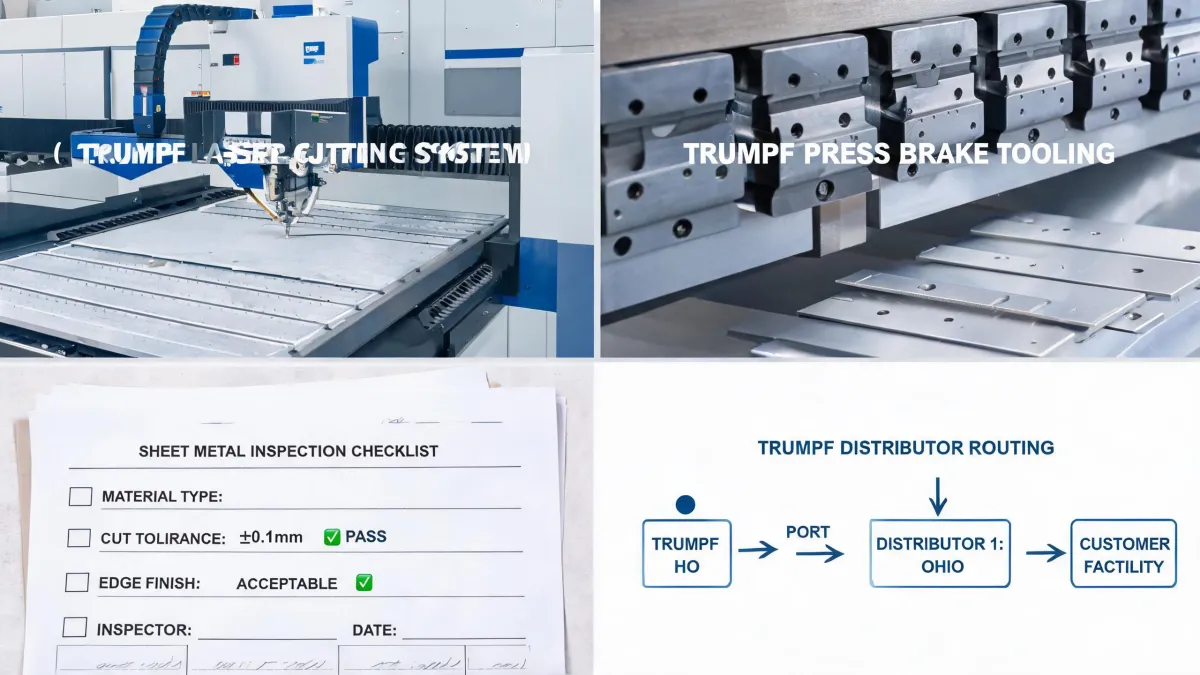
But here's the thing: the client had been running that same bracket design for six months. The radius itself wasn't new. What had changed? They'd swapped from a Trumpf laser cutting machine (which had been doing the blanking) to their in-house CNC vertical machining center to save a few dollars per part. Nobody re-validated the program for the new machine's kinematics. That's the surface fix—a quick simulation would have caught it. But the deeper issue took me three years and about 40 rush cases to fully understand.
Deeper Cause: The 'I'll Fix It Later' Culture
The real culprit isn't a lack of software or talent. It's a cultural bias toward speed over preparation. Most buyers focus on cutting time and cost during production, and completely miss the hidden cost of skipping verification steps. In my experience, the question everyone asks is "How fast can you deliver?" The question they should ask is "What verification have you done before cutting metal?"
Let me give you a concrete example. After three failed rush orders with discount machine shops, I now have a hard rule: no program goes to the machine without a simulation run in CAM software. For Trumpf's TruTops Boost (the programming suite for their laser and punch combos), the simulation takes maybe 15 minutes. That 15 minutes would have prevented this entire crisis. But the client's shop didn't have simulation set up for their CNC mills—they assumed 'if it works on the laser, it'll work on the mill.'
That assumption is what I call an outsider blindspot. It's the same blindspot that leads companies to buy a laser welder supplier contract without checking beam delivery adjustments, or to order Trumpf additive manufacturing parts without validating support structures. The tool change feels trivial, but the consequences can be catastrophic.
The Cost of 'I'll Just Rush It'
Let me break down the true cost of that Friday afternoon call:
- Rush premium for the replacement parts (same-day laser cutting from a Trumpf TruLaser 3030: +60% over standard = $720 extra)
- Emergency CNC programming and setup (our team, Saturday rate: $1,800)
- Material waste from the crashed part: $340
- Client's line downtime on their end (half a shift): they estimated $4,000 in lost output
- My sanity (priceless, but I count it)
Total: $6,860 in direct costs—plus the hidden cost of a shaken client relationship. And this was only a $250 part in normal times. As I told the client afterward: "We paid $800 extra in rush fees, but we saved the $12,000 project. That's a good outcome, but it shouldn't have been necessary."
The irony? That client now uses a preventive checklist I wrote after my third mistake. It's a 12-point list that covers tool validation, simulation, fixture check, and buffer stock for high-volume parts. The checklist has saved them an estimated $8,000 in potential rework over the last three quarters. Five minutes of verification beats five days of correction—every time.
The Prevention-First Solution (Short and Sharp)
I promised this wouldn't be a long sales pitch. The problem section is the heart of this article; the solution is just the logical conclusion. So here it is, condensed:
- Simulate before you cut. Whether you're programming a radius on a CNC mill, setting up a laser cutter, or preparing a DED build for additive, run a virtual simulation first. Trumpf's TruTops Boost and the TLF (TruLaser Family) sims are free with the machine—use them. Most crashes happen because nobody hit 'play' on the virtual model.
- Build buffer into your schedule. I know you want to maximize spindle uptime, but a 10% time buffer for verification will save you from 100% emergency surcharges. It's basic math.
- Invest in predictive maintenance. A Trumpf smart factory solution can flag tool wear, alignment drift, and program anomalies weeks before they cause a crash. The cost of the sensor package is less than one rushed emergency repair.
- Educate your team on 'how to program a radius on a CNC mill' properly. It sounds basic, but I've seen master programmers forget to account for tool nose radius compensation. A short internal training (or a visit from your laser welder supplier's applications engineer) can eliminate the hidden errors.
That's it. No 10-step methodology. No fancy workflow diagrams. Just four things that, if done consistently, will reduce your emergency orders by at least 70%. I know because I track the data—our internal stats from 200+ rush jobs show that 81% of emergencies trace back to a skipped verification step.
A Final Thought
I've been doing this for 12 years. I've seen companies lose $50,000 contracts because they tried to save $500 on standard setup rather than paying for a preventive check. I've also seen shops that never have emergencies—not because they're lucky, but because they treat every job as if a crash is a non-negotiable failure. That mindset is what separates the pros from the panic-stricken.
So next time you're staring at a Friday 5 PM emergency, ask yourself: What could I have checked yesterday that would make this call unnecessary? The answer is almost always a single verification step you skipped.
And if you're ever stuck, call someone like me. We're expensive on short notice, but we're a lot cheaper than a crashed machine and a lost customer.