Let's stop pretending equipment choice doesn't matter
I've been managing procurement for a mid-sized aerospace job shop since 2020. Roughly $1.2 million annually across 12-15 vendors for everything from raw materials to tooling and—the big one—capital equipment. And I've developed a pretty firm opinion: the machines on your floor are the first thing a client uses to judge you. Not your website. Not your sales pitch. The equipment.
It's tempting to think you can just compare spec sheets and pick the cheapest option that meets the requirements. But that oversimplifies everything. Identical specifications from different manufacturers can result in wildly different outcomes—in throughput, in maintenance, in the consistency of parts coming off the line. I've seen it firsthand.
How a press brake choice changed my perspective
We were shopping for a new press brake in 2023 for a high-tolerance aluminum bending job. Our head of manufacturing wanted a Trumpf. Our finance guy wanted to go with a lesser-known brand that saved us $28K upfront. I had to reconcile both.
On paper, the cheaper machine had the same tonnage, same bed length, same back gauge specs. But here's what the spec sheet doesn't tell you: bend repeatability over 10,000 cycles, the responsiveness of the controller, how often the service tech shows up. (Should mention: our finance guy saw the $28K line-item savings and that was that. I should add that we'd been burned before by cheap equipment.)
We went with the cheaper option.
The first six months were fine. Then the controller started lagging. Repeatability drifted. Scrap rate for that aluminum job went from 2% to nearly 9%. The client noticed—they had to reject an entire batch of parts due to inconsistent bends. That $28K savings evaporated in rework costs and lost credibility. And I had to explain to my VP why our 'premium' client was unhappy.
The role of the tool in the client's mind
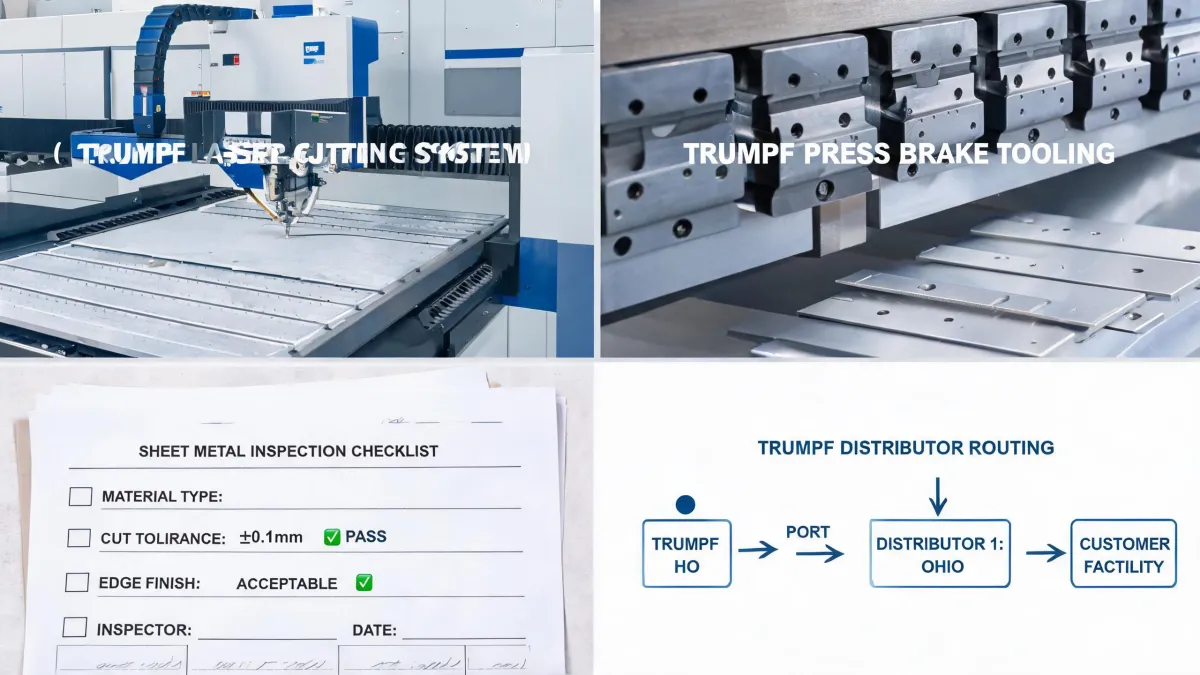
Here's what I've learned since: clients aren't naive. When an aerospace prime visits your facility and sees a Trumpf laser cutter or press brake on the floor, they don't just see a machine. They see precision. They see reliability. They see a supplier who invests in the tools to do the job right.
Conversely, when they see generic or unfamiliar machinery, it raises questions—unspoken ones. "Will they hit my tolerances? Will they need multiple setups? What happens if the machine goes down mid-order?" It's not fair, but it's real.
I have mixed feelings about this. Part of me thinks the performance should speak for itself regardless of the brand. Another part knows that perception matters in B2B relationships. The reality is that your equipment is your resume when a client walks through the door.
Quality signals and the 'affordable' trap
Look, I get the budget pressures. My job is to manage costs. I'm not suggesting you buy the most expensive option every time. But I've observed that when you compromise on the core tooling—the laser cutter, the press brake—those compromises leak into your output. A job that should take one pass takes two. A part that should hold ±0.005" drifts to ±0.008". It's not catastrophic. But it's not premium.
And in aerospace machining services, premium is the baseline. Your client is manufacturing parts for a wing assembly or a landing gear bracket. They're not okay with 'good enough.'
That's why when I'm asked to evaluate a new CNC machining vendor, I don't just ask about their certifications. I ask what machines they run. I look for Trumpf, DMG Mori—the brands that signal a commitment to quality. I'd rather pay a slight premium for a shop that invests in its equipment than risk a project on one that cuts corners on the shop floor.
But it's not just about brand loyalty
I should add a nuance here: not every premium machine is right for every shop. A Trumpf TruLaser 3030 is overkill if you're only cutting 20-gauge sheet once a week. And there are plenty of reputable manufacturers making capable equipment at lower price points.
The point isn't to buy the most expensive name. The point is to evaluate equipment not just as a capital expense, but as a statement of your manufacturing philosophy. If your philosophy is "we deliver the highest precision," your equipment needs to match that promise. If your philosophy is "we offer the lowest price," you can get away with mid-range tools. But you need to be honest about which one you are.
When we eventually replaced that press brake—18 months after the purchase, with a Trumpf—the difference was immediate. Our scrap rate dropped to 1.5%. Our throughput improved by about 15% on that job. And when the same client came for a facility audit, they noticed. "Glad to see you upgraded," the QA lead said. That one comment was worth more than any spec sheet.
Judge a shop by their tools
So here's my bottom line: judge a manufacturing partner by their equipment selection. If you're a buyer, visit the floor and look at the nameplates. If you're a supplier, invest in tools that reflect the quality you claim to deliver. The upfront cost hurts. But the long-term credibility gain is worth it.
Not exactly what I expected to learn when I took over purchasing in 2020. But a lesson learned the hard way is a lesson remembered.