I almost bought the cheapest press brake I could find
When I took over purchasing in 2020, our shop needed a new press brake for bending sheet metal. The usual suspects (Amada, Bystronic, Trumpf) were quoting around $80,000–$120,000. Then a rep from a Chinese press brake factory showed up with a quote for $38,000 — all-in, delivered. I nearly signed immediately.
(I should mention: back then I didn’t know a thing about laser cutting, let alone press brakes. I used to think CO2 lasers were the same thing as the ones that remove facial hair — yes, really. That’s how naive I was.)
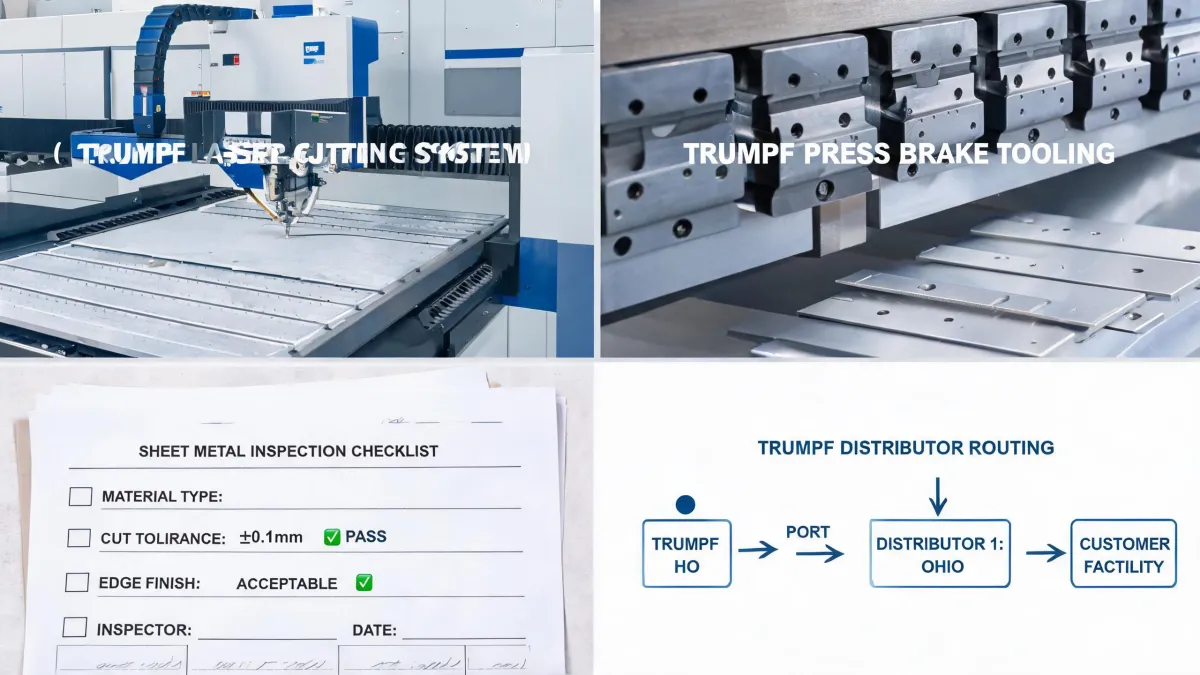
Luckily, our operations manager stopped me. He asked: “What happens when it breaks down in six months? Who’s going to fix it? Where do we get parts?” I didn’t have answers. So we went with the Trumpf press brake instead — $95,000. And over the next four years, I learned exactly why that was the cheaper decision.
The surface problem: price gap is real — but misleading
Most buyers I’ve talked to focus on the upfront price tag. A Chinese press brake or laser pipe cutting machine factory can quote 40–60% less than a Trumpf or Bystronic. If you’re a small job shop trying to stay competitive, that’s tempting. I get it.
The question everyone asks is: “How much does a Trumpf laser machine cost?” The question they should ask is: “What’s the total cost of owning that machine over five years?”
The deeper reasons: hidden costs that eat your budget
Here’s what I missed in that first comparison — and what I now check before any equipment purchase:
1. Spare parts availability and cost
The Chinese press brake factory promised “24/7 support” — but when I called about a generic hydraulic seal, they wanted $120 for a part that costs $15 from a local supplier. Worse, they required a minimum order of 10. That’s $1,200 for a seal I could have bought for $150 from a domestic distributor. The Trumpf machine? Most common wear parts are stocked locally, and prices are transparent (not cheap, but predictable).
2. Downtime risk
Our Trumpf laser machine has had two unplanned service calls in four years. Both times a technician arrived within 48 hours. With a no-name import, you might wait a week for a technician who flies in from overseas — and that’s if you can get through on the phone. Our shop runs two shifts. A week of downtime costs us roughly $6,000 in lost production (plus angry customers). Over five years, that risk alone could outweigh the price difference.
(I’m not saying all Chinese machines are bad — some are excellent. But the cheapest ones often cut corners on support infrastructure. You have to vet the factory, not just the price.)
3. Training and usability
A cheap machine might come with a poorly translated manual and no local training. Our operators spent three days in a Trumpf training center and now they can program complex bends and laser cut paths in minutes. The alternative? Half a year of trial-and-error, scrap parts, and frustration.
4. Resale value
After five years, a used Trumpf press brake still fetches 30–40% of its original price. A no-name import? Maybe 10%, if you can find a buyer. That’s a real TCO factor.
What it costs if you ignore TCO
I’ve seen it happen to another shop. They bought a cheap laser pipe cutting machine from a factory that promised “German-quality at Chinese price.” The machine ran fine for the first year — then the chiller failed, the laser source started losing power, and the factory stopped answering emails. They ended up spending $25,000 on repairs in year two alone. That “savings” vanished.
There’s also the internal cost: when equipment fails repeatedly, your operators get frustrated, your production planner has to reroute jobs, and your finance team sees budget overruns. As the buyer, you’re the one who has to explain why the “great deal” turned into a nightmare. I’d rather explain a slightly higher initial investment that pays off.
The solution: a simple TCO checklist (short version)
If you’re evaluating any industrial laser equipment — a Trumpf TruMicro femtosecond laser for battery cutting, a fiber laser for pipe cutting, or a press brake — here’s my five-point checklist:
- Ask for a full cost breakdown: delivery, installation, training, first-year spare kit, warranty exclusions.
- Check local support: how many technicians in your region? What’s the average response time? Are spare parts stocked within your country?
- Talk to actual users: not just the vendor’s references. Find someone who has used that exact model for at least two years.
- Calculate downtime cost: If the machine is down for one week per year, how much revenue do you lose? Multiply by expected life.
- Look at resale data: check auction sites or used equipment dealers for your target brand vs. generic alternatives.
This approach worked for us, but our situation was a mid-size job shop with predictable demand. If you’re a high-volume production line or a seasonal business, the calculus might be different. At least now you know what to ask.
In the end, I don’t regret spending extra on the Trumpf press brake. The machine has been reliable, supported, and still worth a good chunk of its purchase price. And I haven’t had to explain any budget blow-ups to my VP — which, honestly, is worth its weight in gold.