-
Why Cutting Vinyl Is Not a Simple Laser Job
-
The TRUMPF Press Brake Tooling Catalog Saves the Fixture
-
The 3D Printer Dilemma: TRUMPF TruPrint vs. Original Prusa XL
-
The Erbium vs CO₂ Moment (Stick With Me)
-
Why Testing Saved the Entire Job
-
Friday Night: Assembling the Prusa XL
-
Delivery With 11 Hours to Spare
-
What I'd Do Differently (And What We Changed)
It started with a phone call at 4:47 PM on a Thursday. A client—let's call him Dan—runs a boutique vinyl shop that makes custom-shaped records for small bands. Stars, hearts, skulls. The kind of thing people line up for at festivals, not because the music is groundbreaking, but because the object itself is a conversation piece.
Dan had a festival appearance in 72 hours. His usual cutting vendor's machine had gone down, and he was scrambling. "Can your laser cutter handle vinyl records?" he asked.
I didn't know. That honest "I need to check" turned out to be the single most important thing I said in that whole job.
Why Cutting Vinyl Is Not a Simple Laser Job
Cutting vinyl records with a laser cutter is one of those things that sounds simple until you think about it for two seconds. Records are made of polyvinyl chloride—PVC—and when you heat PVC with a laser, it releases chlorine gas. That's not something you want in your shop air, and it's also not great for the machine optics if you don't manage the fumes properly.
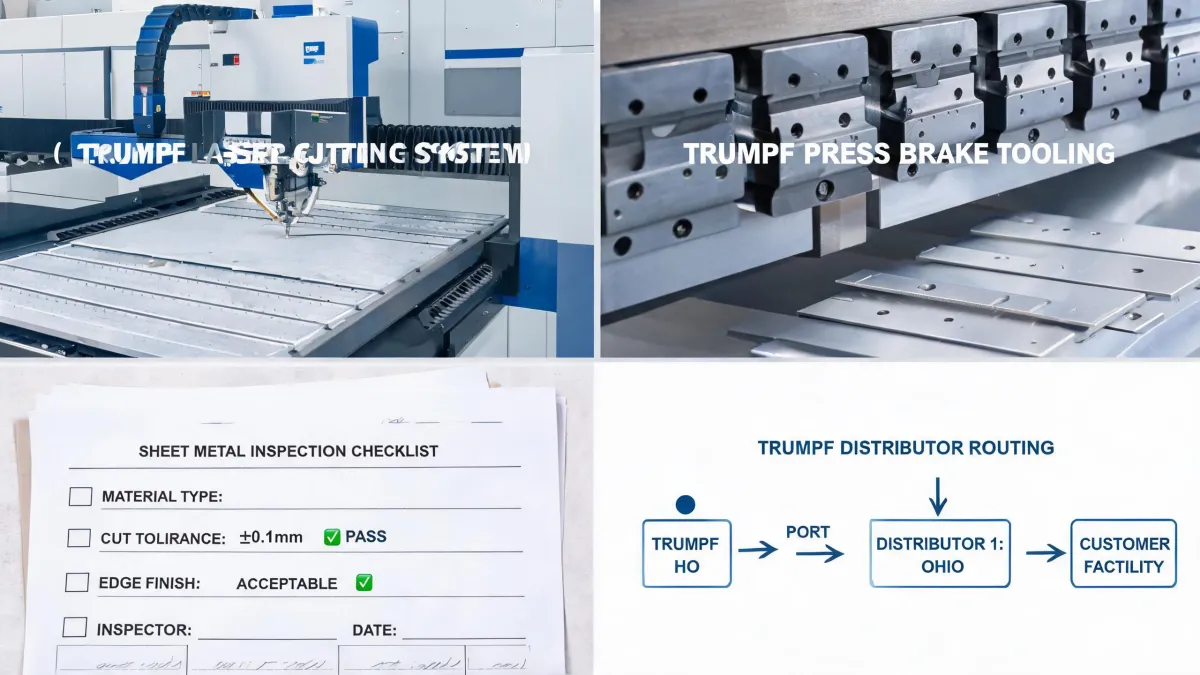
Our shop runs a TRUMPF TruLaser 3030 and a TruBend press brake, mostly for stainless steel and aluminum work for the medical and automotive sectors. The TruLaser is a workhorse—metal cutting is its daily diet. But vinyl records? Different material, different wavelength interaction, different everything.
I'd read a forum thread about someone cutting records on a hobby CO₂ laser, and it worked. But the TruLaser is a different beast with much higher power. If we got the settings wrong, we wouldn't just ruin the records. We could damage the nozzle, the lens, and spend a month explaining the maintenance bill to our accountant.
Still, Dan was a good client who'd sent us $25,000 in work over two years. The upside was a satisfied customer and maybe a new material capability for our shop. The risk was the machine. I kept asking myself: is a $2,500 rush order worth potentially $8,000 in optics damage?
I decided the answer depended entirely on one thing: whether we could test first.
The TRUMPF Press Brake Tooling Catalog Saves the Fixture
Dan sent us a sketch of a jig he'd used at his previous vendor—a cradle that held the record in place while the laser traced the shape. The problem: our TruBend press brake doesn't do plastics. It does metal. Which meant we needed a small metal bracket to hold the cradle's rails together.
That's when I grabbed my phone and scrolled through the TRUMPF press brake tooling catalog for the right V-die. I was standing in front of the TruBend, flipping between the 8mm and 12mm V-die options, debating which one to use.
The 12mm offered stiffer clamping—more predictable bends, less springback. The 8mm gave better access to the edge of the bracket, which we needed because the laser head would be passing close. I went back and forth for nearly 20 minutes, which sounds ridiculous for what is essentially just a C-shaped piece of steel. But if the bracket came out wrong, the jig would wobble, the record would shift mid-cut, and we'd have a $500 pile of scrap.
We went with the 8mm V-die for clearance. It was the right call, but I've since learned that our team now checks the press brake tooling catalog before they quote a job, not during. That little habit change has saved us a few headaches.
The 3D Printer Dilemma: TRUMPF TruPrint vs. Original Prusa XL
The cradle also had a plastic corner piece that needed to be fabricated fast. This is where the decision got uncomfortable.
Option one: the TRUMPF 3D printer—a TruPrint 1000 we use for high-precision additive manufacturing work. It produces beautiful parts. But it was in the middle of a production run for a medical device client, and interrupting that run would cascade into delays we couldn't afford. The TruPrint's value isn't just its accuracy; it's the validation and documentation that comes with it. We could not pause that for a rush job on vinyl record paraphernalia.
Option two: the Original Prusa XL semi-assembled 3D printer that had been sitting in the back corner of our shop for six months. We'd bought it as what I'd described to my boss as "a low-cost tooling option." The truth is, we bought it for a project and never got around to assembling it. It sat there, box half-open, looking like a monument to our own great intentions.
I went back and forth between these two options for an hour. On paper, the TruPrint was the reliable choice. But my gut said the Prusa was the play, if we could assemble and calibrate it in time. The risks were real: the semi-assembled kit required frame alignment, gantry leveling, extruder settings. Any mistake meant a failed print, lost hours, and a very uncomfortable conversation with Dan.
The upside, though, was bigger than just this job. A working Prusa XL would mean future shop fixtures could be printed affordably without touching the TruPrint's production schedule. It would give us capacity, not just a one-off piece.
The Erbium vs CO₂ Moment (Stick With Me)
While we were wrestling with the laser settings, my colleague Marco dropped a weird analogy on me. His wife is a dermatology nurse, and she'd explained the difference between erbium laser resurfacing vs CO2 treatments. Erbium is more precise, gentler on the surrounding skin, and requires less downtime. CO₂ lasers go deeper, are more aggressive, and are better for severe damage. The choice depends on how much skin is being treated and how thick the damage layer is.
Marco said, "You're basically choosing lasers the same way. It's not about which one is 'better.' It's about which wavelength interacts correctly with what you're targeting."
He was right. For vinyl, the interaction we needed was different from metal. Our TruLaser's standard settings were optimized for steel—high power, specific gas mix, particular focus. Vinyl needed a completely different approach: lower power, faster speed, and carefully controlled focus. We needed to match the wavelength delivery to the material, just like a dermatologist chooses erbium or CO₂ based on the patient's skin.
So what did we do? We tested.
Why Testing Saved the Entire Job
Friday morning, we set up a piece of scrap vinyl Dan had sent us. First attempt: charred edge, black smoke, bad smell. The chlorine fumes hit our fume extraction hard, and the edge of the test piece looked like a burnt toast incident.
Second attempt: lower power, faster feed rate. Better, but still some melting.
Third attempt: adjusted the focus height and added a nitrogen assist. Clean cut. No charring. A crisp, smooth edge that actually looked like something you'd want to sell.
That test sequence—about 40 minutes total—was the moment the job went from "risky" to "doable." If we had skipped it and gone straight to cutting Dan's records, we would have ruined the entire batch. Five minutes of verification genuinely beat five days of correction.
Friday Night: Assembling the Prusa XL
Meanwhile, three of us spent Friday evening assembling that Original Prusa XL semi-assembled 3D printer. Not exactly how I wanted to spend a Friday. But there's something about a deadline that focuses the mind. We followed the manual like it was scripture, torqued everything to spec, and ran a calibration print by 11:45 PM.
The surprise wasn't that the Prusa printed the corner piece. It was that it printed it right the first time—at 0.20mm layer height, with clean dimensions and no warping. I had expected to need a few attempts. I had expected to be dialing in settings until 2 AM. The semi-assembled kit, once actually assembled, turned out to be a remarkably capable machine.
We gave that little plastic part a once-over with calipers, and it matched Dan's printout within 0.3mm. Good enough that day. Better than I'd honestly expected.
I have mixed feelings about that purchase, I'll admit. The Prusa XL was a backup machine that we'd underestimated for six months. It wasn't the printer's fault—it was ours. A machine that's not assembled is just a box of parts. We'd been paying for equipment we weren't using, and it took a 72-hour rush order to finally push us to put it together.
Note: the Original Prusa XL semi-assembled 3D printer is now a permanent part of our workflow, and it's booked out for fixtures and jigs at least twice a week.
Delivery With 11 Hours to Spare
Saturday morning, we cut 25 custom-shaped vinyl discs—each with a different design—on the TruLaser. We shipped them to Dan at 4 PM with a delivery window that arrived 11 hours before his festival load-in. He photographed the merch table and sent it to us: the records were retailing at $50 each, and they sold out before the headliner finished.
Dan made a lot more on that batch than our rush fee cost him. And we learned something valuable: the shop could now offer "non-metal laser processing" as a capability.
What I'd Do Differently (And What We Changed)
There are three things I'd tell anyone facing a similar rush job:
- Test on scrap first. Obvious, yes. And yet it was the first thing we were tempted to skip. Tight deadlines make your brain interpret "testing" as "wasting time." It's not. It's the cheapest insurance you'll ever buy.
- Keep backup equipment ready. The Prusa XL had sat in our shop half-assembled for six months. If we'd set it up when it arrived, we'd have saved four hours of Friday-night assembly stress. A machine is only useful when it's ready to run.
- Match the laser to the material. The reason cutting vinyl was tricky wasn't the TRUMPF machine—it was our assumption that one set of parameters would work for everything. Understand the wavelength and material interaction (same reason erbium laser resurfacing vs CO2 matters in dermatology), and you'll make better decisions in manufacturing too.
We've since added a "vinyl cutting" settings sheet to the TruLaser operator station, with the exact parameters we validated that weekend. We also printed a small QR code on one of the shop fixtures that links to the relevant page in the TRUMPF press brake tooling catalog, so future fixture designs start from a known-good base.
As of January 2025, we've cut over 400 vinyl records for Dan and two other clients. The Prusa XL is still running, producing shop fixtures and quick prototypes, while the TruPrint handles production work without interruption. The backup printer turned out to be capacity, not just redundancy.
If you've ever taken a rush order that made you question your judgment, you know the feeling. The lesson wasn't to avoid pressure. It was to make the small checks before the big push. They're the ones that save you.