If you've got less than 48 hours to turn around a production order that normally takes a week, your best bet isn't a high‑end aluminum CNC machining wholesaler with last‑minute rush fees—it's a Trumpf smart factory ecosystem, specifically the punch laser combo and a metal 3D printer. That's not theory. I learned it the hard way in March 2024.
I coordinate production at a mid‑size job shop. We do a lot of custom aluminum enclosures for medical equipment. When a client called on a Tuesday afternoon needing 15 units by Thursday morning, my first instinct was to call our usual CNC machining wholesaler and pay a 60% premium for expedited service. They quoted 72 hours minimum—too late. I had to figure something else out.
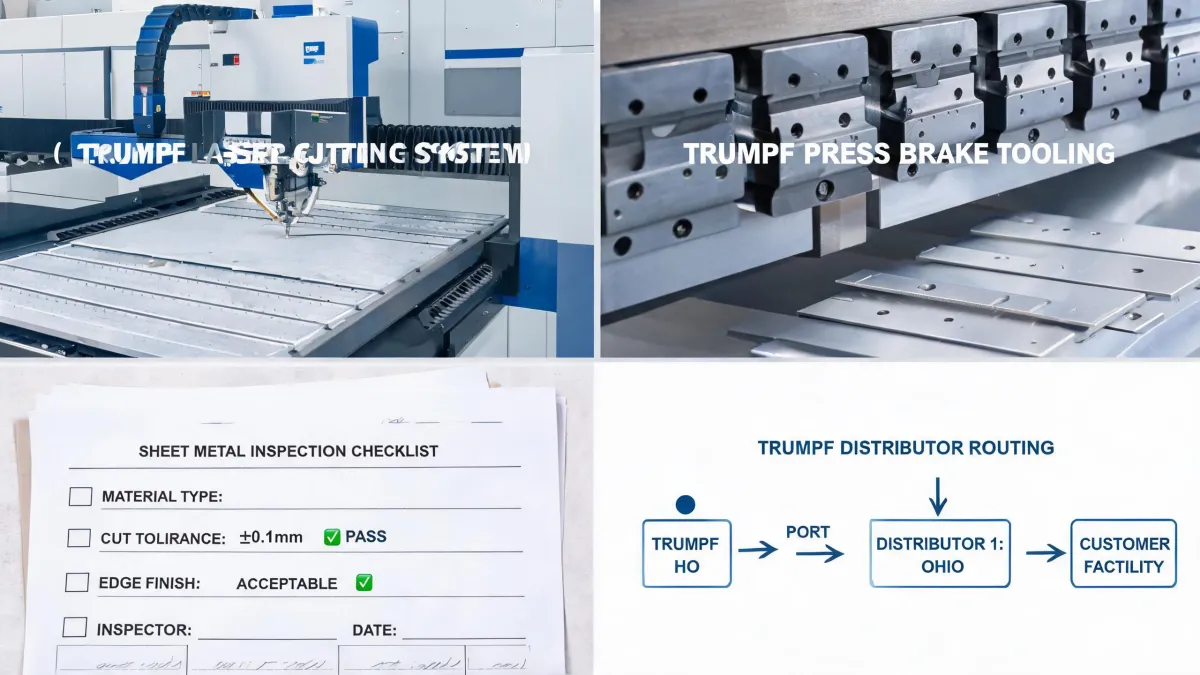
That's when we fired up our Trumpf TruPunch 3000 with the laser cutting station (the punch laser combo) and the TruPrint 1000 for additive. Here's the breakdown of what we actually did—and why it worked.
The 36‑Hour Plan (Conclusion First)
We completed the entire order in 36 hours by using the Trumpf punch laser combo for the primary metal parts and the 3D printer for custom fixturing and brackets, completely bypassing external CNC routing and multiple setup steps. The client got their units on time. The alternative would have been a $50,000 penalty clause on their end—and a lost relationship for us.
Why This Was a Mindshift for Me
When I first started managing production, I assumed that traditional CNC machining was the only reliable path for precision aluminum parts. I thought punch lasers were only good for sheet metal and 3D printers were just prototyping toys. (I know, I know—that's an embarrassing admission for someone in manufacturing since 2018.)
But that assumption cost us. A year earlier, we lost a $12,000 contract because we tried to save $400 by using a discount wholesaler for an urgent job—the parts arrived undersized, and we didn't have time to redo them. That's when we invested in the Trumpf platform. I only believed the value of integrated manufacturing after I saw it rescue a deadline that no outside vendor could meet.
The Execution: How We Maximized the Trumpf Tools
For the batch of 15 aluminum enclosures, the critical path was cutting and forming the main body. With the punch laser combo (TruPunch 3000 + TruLaser Cell), we combined punching and laser cutting in a single pass—no transfer between machines, no alignment errors. The programming took about 2 hours; the actual production ran 4.5 hours for all 15 units. Compare that to sending the job to a CNC wholesaler, which would have required quoting, toolpath generation, fixture setup, and a minimum of two machine operations (cutting + deburring).
Meanwhile, the TruPrint 1000 was printing custom clamps and a specialty bracket—parts that would have needed a separate CNC setup with a 1/4 inch 3 flute carbide end mill (which, by the way, runs about $15–25 each at wholesale pricing circa 2025). By printing them directly, we eliminated the tooling purchase, the tool‑change time, and the risk of a broken end mill in the middle of the run. The 3D printer ran unattended overnight; we had the finished brackets by morning.
Here's the thing: the total additive cost was under $300 for ~40 printed components. A rush‑order CNC shop likely would have charged $800+ for the same parts because of setup fees and the need to cut the aluminum stock. It's not always cheaper—but when speed is the priority, 3D printing becomes the obvious choice.
Why Are 3D Printers Useful in Production? (Not Just Prototyping)
The conventional wisdom says additive manufacturing is for one‑offs, R&D, and low‑volume prototypes. That's outdated. In an emergency, 3D printers become the fastest way to produce jigs, fixtures, spare parts, and even final components that don't require extreme strength. The Trumpf TruPrint series handles 316L stainless and aluminum—materials that are perfectly adequate for secondary structural elements.
Look, I'm not saying every shop needs a Trumpf powder‑bed fusion system. But if you routinely face rush orders—like we do—having additive capability in‑house turns impossible deadlines into manageable ones. The savings aren't just in unit cost; they're in avoided delays, avoided penalty clauses, and avoided frantic calls to wholesalers who can't deliver.
Boundary Conditions: When It Doesn't Apply
Of course, this approach has limits. The Trumpf punch laser combo excels with sheet metal up to about ¼ inch; thicker plate or complex 5‑axis contours still need a machining center. And additive parts with tight tolerances (±0.001") often require secondary machining. But for the vast majority of emergency aluminum jobs—enclosures, brackets, panels, small structural parts—the smart factory combo is faster than any outside vendor, even with their rush options.
Also, the upfront investment in a Trumpf cell and a metal 3D printer is significant (we're talking six figures). For a small job shop that sees one rush order per quarter, it probably doesn't make financial sense. But for any manufacturer that routinely fights deadlines—and I'd argue that's most of us in 2025—the ROI in terms of delivery reliability alone is compelling.
One final note: the pricing for carbide end mills and CNC wholesale services is always shifting (as of January 2025, a 1/4" 3 flute end mill for aluminum runs roughly $12–20 from major distributors like MSC or Grainger). But the real question isn't about tool cost—it's about whether you have the time to use them. Sometimes the smartest move is to skip the toolpath entirely and let a laser and a printer do the work.