-
Is Trumpf equipment actually worth the premium?
-
What's the real cost of a Trumpf laser cutting system over five years?
-
Are Trumpf press brakes a good investment for a small shop?
-
What should we budget for when adding a CNC lathe or outsourcing turned parts?
-
Is ARBURG injection molding worth considering?
-
Are 3D printers harmful?
-
What about smart factory integration?
-
Should I buy a used Trumpf machine?
Someone at every manufacturing company has to ask the hard questions about equipment budgets. That's me. I've been managing procurement for a 40-person fabrication shop for six years, and I log every order in our cost system. This FAQ covers what I've learned about Trumpf machines and a few related topics that keep coming up.
Is Trumpf equipment actually worth the premium?
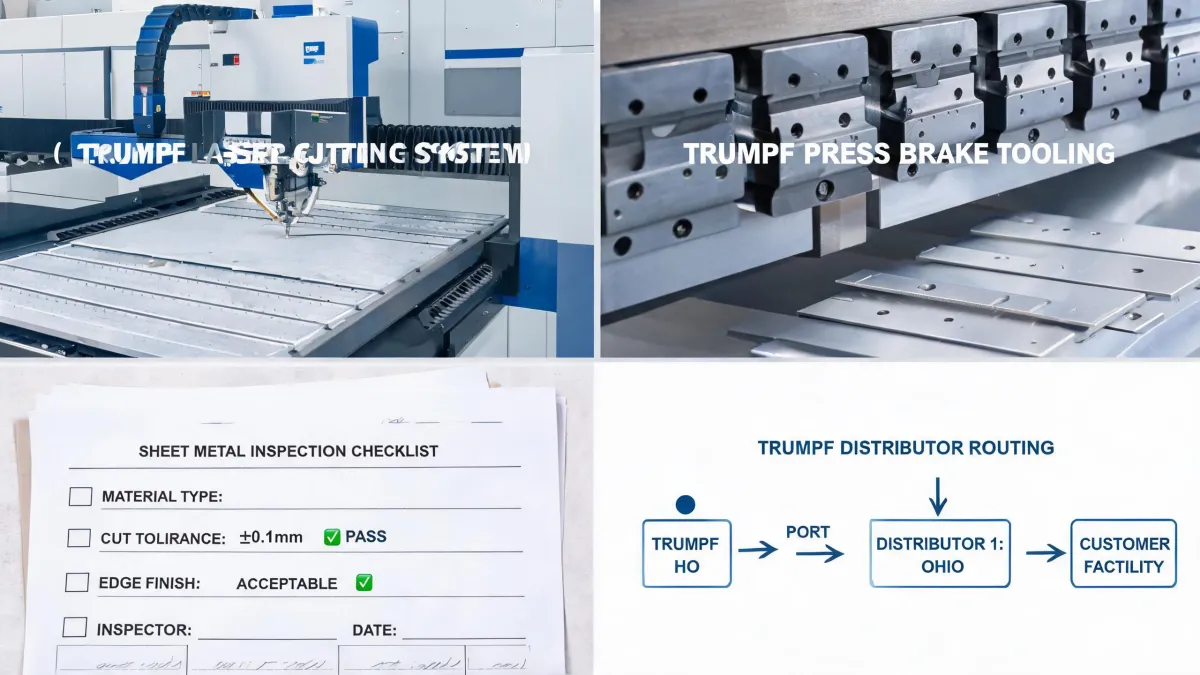
When we bought our first Trumpf laser cutting machine, I fought the purchase. I thought a cheaper option made more sense. Five years of data says otherwise. The total cost of ownership was lower than the two mid-tier alternatives we compared. The machine held its resale value, uptime was better, and the service contract actually got used.
But premium pricing isn't for everyone. If you're cutting simple geometry at low volume, a used machine can be the right call. At least, that's my experience.
What's the real cost of a Trumpf laser cutting system over five years?
The sticker price is maybe 60% of the true five-year cost. When I built a TCO spreadsheet for our 2023 budget review, these were the big items:
- Laser gas or electricity consumption
- Consumables: nozzles, lenses, focus rings
- Maintenance contract: for us, about 2.5% of purchase price per year
- Fume extraction filters and waste handling
- Operator training
One thing that surprised me: the "free basic training" covered button-pushing, not real programming. We budgeted another $5,200 for useful training. And consumables were more expensive than I expected—roughly $0.15 per part, though I'd have to check our 2024 numbers.
Are Trumpf press brakes a good investment for a small shop?
I went back and forth on this one for about a month. A used press brake cost half as much, but the Trumpf angle measurement and crowning system cut our setup time way down. Setup time is money, especially for short runs.
For example, a job that used to take 45 minutes of setup now takes 15. At our shop rate, saving 100+ hours a year justified the extra upfront cost. But it only made sense because we had the laser cutting volume feeding it. If I were starting from zero, I'd lease instead of buy.
What should we budget for when adding a CNC lathe or outsourcing turned parts?
This seems unrelated, but I get asked about turning a lot. If you're evaluating cnc lathe turning wood service factories or metal shops, the same cost rules apply. I've compared quotes from more than 20 vendors. The hourly rate is a starting point, not the final answer.
Once we outsourced a batch of 500 turned parts to a shop that looked 30% cheaper. The final invoice was 12% higher than our usual vendor because of material surcharges. I'm not a metallurgist, so I can't judge raw material costs. But now I ask for itemized quotes before committing.
Is ARBURG injection molding worth considering?
A lot of people search for "arburg als injection molding" options before making a decision. I'd say the same thing I say about Trumpf: evaluate lifetime cost, not sticker price.
I helped a client compare quotes. ARBURG was about 20% more upfront—maybe 18%, I'd have to check—but their tolerance-critical part needed that process control. Defect rates dropped from 4% to under 1%. That paid for the price difference in about 14 months. For loose-tolerance parts, a cheaper machine might be fine.
Are 3D printers harmful?
This one comes up a lot. I'm not an industrial hygienist, so I can't speak to the medical side. What I can tell you from a facilities perspective is that FDM printers release ultrafine particles and VOCs when the plastic heats. Resin printers use chemicals that can irritate skin.
OSHA's hazard communication standard applies, and NIOSH has published practical guidance on printer emissions. In our additive cell, we put the printer in a ventilated enclosure with a HEPA filter, and we check it monthly. That's not overkill; it's basic risk management.
What about smart factory integration?
Industry 4.0 is a term that makes me nervous because it's easy to overspend. But our Trumpf's network connection helped us see that we were only utilizing the machine 45% of available time. We adjusted scheduling and got to 60% without buying anything new.
Still, software can't fix bad habits. Clean compressed air and regular maintenance matter more than any dashboard. What was best practice in 2020 may not be good enough in 2025—but the fundamentals haven't changed.
Should I buy a used Trumpf machine?
I almost bought a used laser cutter once. A reputable dealer offered a machine with 8,000 hours at 40% below list, but the warranty was limited and the service history was thin. I ran the numbers: with a few major spare parts needed, the savings started to disappear.
If you have someone in-house who can maintain it and you know the machine's history, a used Trumpf can be a smart entry point. If you're relying on the manufacturer's service team, the new machine's warranty and guaranteed uptime might be worth more than the discount.