I've spent the last six years buying fabrication equipment for a 40-person custom sheet metal shop. If there's one thing I've learned, it's this: the press brake quote with the lowest number on top is almost never the cheapest machine in the room. And that's not because the vendor's hiding anything—at least not intentionally. It's because we're all comparing the wrong things.
What is a CNC press brake, really? It's a machine that bends sheet metal under program control. But I've learned to ask a different question: what is it going to cost across ten years of producing good parts? That's where the real number comes from.
The Surface Problem: We Compare Sticker Prices, Not Real Costs
Someone sent me a quote comparison last week. Four CNC press brakes, all in the same class, all capable of bending 10-foot sheets of 10-gauge steel. The prices ran from $98,000 to $128,000. A $30,000 spread. If you just look at the all-in price, the choice seems obvious.
But then I started reading the fine print.
One quote included standard tooling. Another didn't. One included a 3-day training package. Another charged $1,800 per day for it. One included delivery and setup. The other listed it as "additional cost to be determined after site inspection." The "cheapest" quote—$98,000—would have required about $12,000 in tooling and another $5,500 in installation and training before it could bend a single bracket.
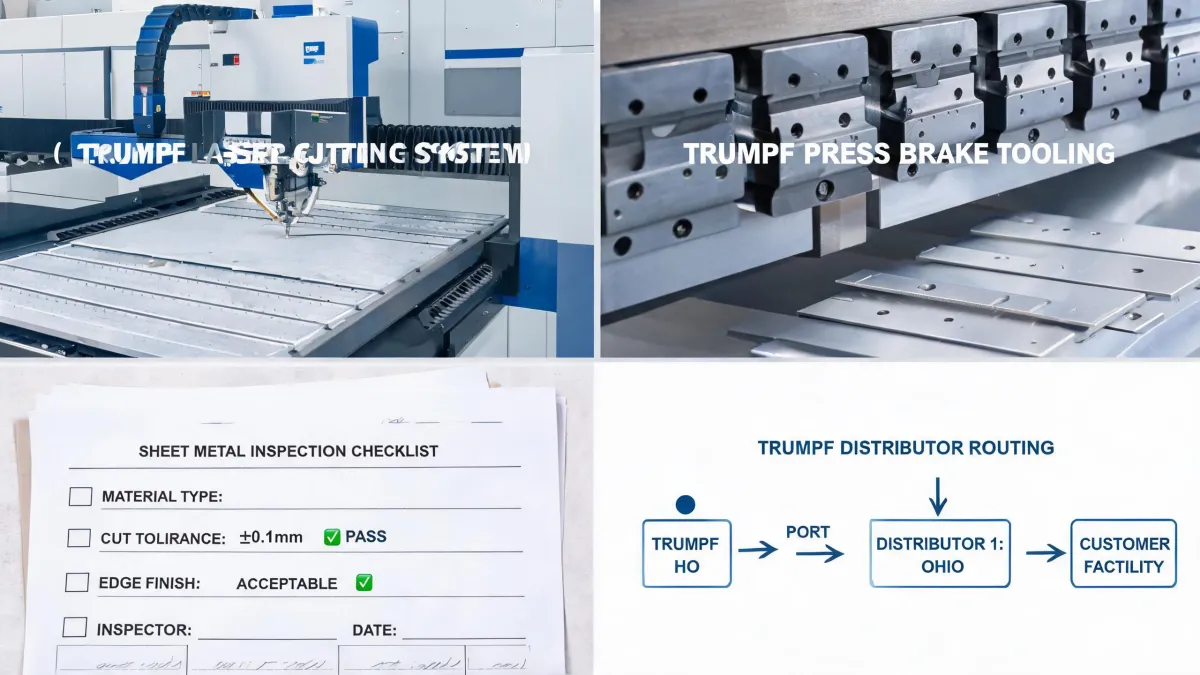
The $128,000 quote from TRUMPF? It included all of that. Actually, it included a bit more: offline programming software, a hydraulic clamping system, and a 12-month service plan. When I totaled the true first-year cash outlay, the difference wasn't $30,000. It was $4,000.
That's the surface problem. We assume press brake pricing is about the machine. It's not. It's about the complete package you need to produce sheet metal bending parts reliably.
The Deep Cause: Where Press Brake Costs Actually Hide
The real issue is that most buyers—and I include myself before this job—don't have a complete map of the cost components. The FTC's advertising guidance (ftc.gov) says claims must be truthful and substantiated. The problem is, a quote can be truthful and still incomplete. The machine is maybe 40% of the lifetime cost, but it's the only part we compare.
Let's run through the categories that bit us.
Tooling is the biggest surprise. A press brake is useless without punches, dies, and backgauging fixtures. Standard sets cost $4,000–$15,000 depending on width and complexity. And specialized tooling—like a crab cutting tool or radius dies—adds another line. One time, we requested a quote for a crab cutting tool for a customer's odd geometry. The tool alone was $2,400. We didn't buy it, but it taught me to ask about tooling on every machine purchase.
Programming and software is the second hidden cost. A CNC press brake is only as smart as its software. Offline programming lets you simulate the bend sequence before touching the machine. That's a productivity multiplier, but it's often listed as optional. On the TRUMPF 5170, the programming package includes a model-based interface that imports 3D parts directly. On a cheaper machine, you might be manually punching in bend angles and backgauge positions for every part. That's hours of setup you'll never get back.
Installation, rigging, and commissioning are easy to ignore. The machine has to come off the truck, be lifted, leveled, aligned, connected to power, and tested. Some vendors quote this as part of the price. Others treat it as an "extra" that appears on the invoice after the machine is on your floor. I've seen installation charges range from $2,000 to $8,000 for the same size machine.
Training is the cost that keeps paying—or keeps costing. A quality setup and programming training program can cut your learning curve from months to weeks. The cheap vendor gives you a 50-page manual and a phone number. The better vendor sends a technician to your shop for a week and makes sure your team knows how to bend the parts you actually make.
Maintenance and downtime are the ones we don't predict until the machine stops. A press brake is a hydraulic, mechanical, and electronic system. If you don't budget for preventative maintenance, you'll be paying the hourly rate plus travel time plus parts plus the cost of the production you lost while the machine sat idle. I still kick myself for not negotiating a service response time clause into our first press brake purchase. When the hydraulic pump failed, the vendor's service tech couldn't come for three days. The $2,100 repair bill was annoying. The $18,000 in lost production was the real pain.
Rework and scrap are the silent kicker. A machine that fights you—that repeats inconsistently, that drifts after a few hours, that requires the operator to babysit every bend—will produce parts that miss tolerance. Those parts get scrapped or sent back to the brake and re-bent. Material cost is the smallest part. The labor and schedule delays are the killers. From the outside, it looks like the expensive machine is the one with the higher price tag. What you don't see is the cheaper machine eating your margin in rework hours.
The Cost of Ignoring It: A $4,200 "Saving" That Turned Into a $14,000 Loss
I'll tell you exactly what happened when we ignored this.
In 2023, we needed a second press brake. We got four quotes. The lowest was $94,000, about $4,200 below the next one. I signed it. We saved $4,200 on paper.
The machine came and the installation alone cost us an extra $2,300 because the vendor hadn't included rigging in the quote. Then the tooling we assumed was included—it wasn't. That was another $6,100. By the time we ran the first real job, the "cheapest" machine had actually cost us $102,400, which was more than the $98,600 quote we'd passed over.
Worse, the backgauge system wasn't as accurate as the spec sheet suggested. We started seeing deflection issues on parts with tighter tolerances. We spent three months trying to dial it in. Eventually, we had to order a custom die set to compensate for the bend inconsistency. That was another $1,400.
In total, the "saving" cost us about $14,000 in the first year. Not including the opportunity cost of the jobs we delayed while troubleshooting the machine.
If I'd calculated the TCO—all-in purchase price, tooling, installation, training, expected maintenance, and the probability of rework—the cheaper machine would have lost on paper before we signed.
The Solution: TCO, Not Sticker Price
So what do we do now?
We built a press brake TCO spreadsheet. It has nine lines: base price, delivery/rigging, installation/commissioning, tooling (standard and special), programming software, training, warranty extension/service plan, expected annual maintenance, and a risk line for rework/downtime. We fill it out with each vendor's responses. If a vendor won't give a firm number for one of the lines, we use a conservative estimate and note it.
And we make the vendors sit through it with us. You'd be surprised how much gets clarified when you ask "what exactly is included?" and wait for an answer.
This approach worked for us, but our situation is high-mix, low-volume custom sheet metal. If you're running high-volume production with the same few parts, your cost drivers might be different. You might care less about flexible programming and more about cycle speed. Your mileage may vary—that's why you have to tailor the model.
For us, the TRUMPF 5170 press brake turned out to be the TCO winner in the last round of bids. Yes, the base price was the highest. But once we added the tooling package, the offline programming suite, the operator training, and the extension on the service plan, the gap narrowed to almost nothing. And the machine's reputation for consistent bending means less rework and fewer late-night calls from the shop floor.
I can only speak to our experience. If you're looking at a different class of machine—say, a used press brake or a basic manual model—the equation might look different. But the method stays the same: don't compare sticker prices. Compare the total cost of producing good parts for the life of the machine.
That's what I'd tell anyone asking which press brake to buy. The answer is never "the cheapest one." It's the one that will cost you the least to run, and that's a different number.