I rejected my first batch of parts at 9:30 on a Tuesday. The welds looked fine to everyone else. I measured the frame anyway. It was 0.8 mm out of square. Not huge. Big enough.
That was a few years ago. I've done it a lot since. I'm the quality manager at a custom metal fabrication shop, and I review every part before it ships. In six years, I've rejected maybe 9% of first deliveries. Not because our team is bad. Because I'm the one who has to be picky before the customer is forced to be.
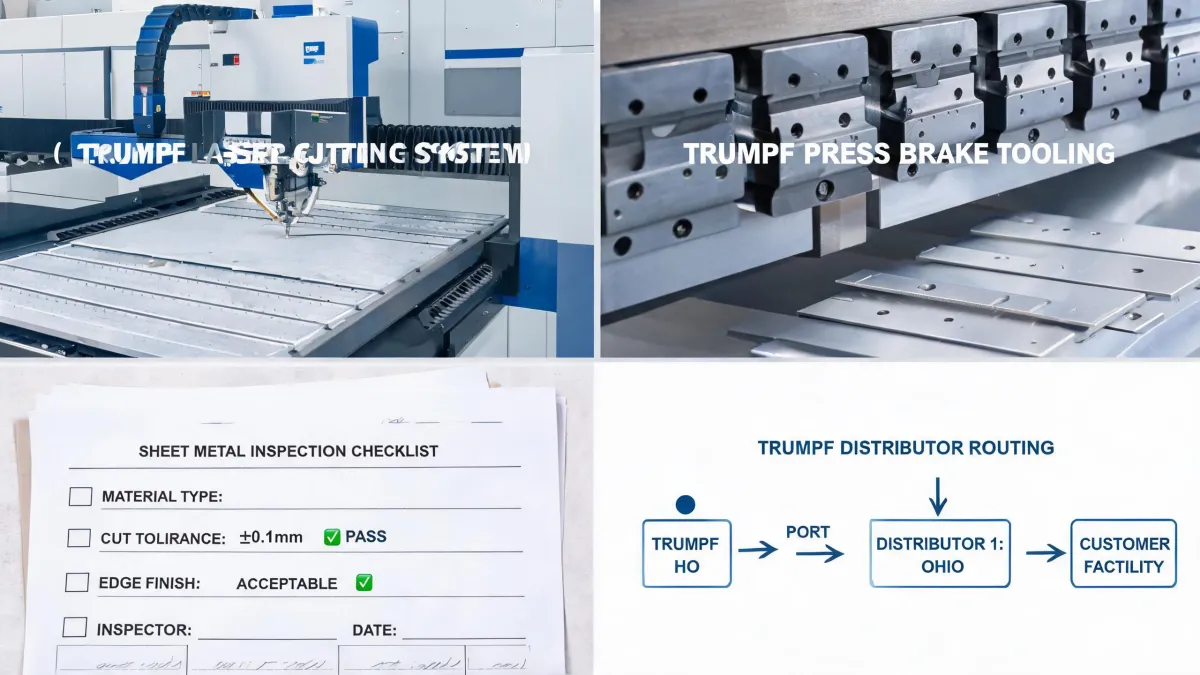
We're not a giant factory. We're a job shop with good equipment and a small crew. We do cutting, bending, welding, marking, and the occasional “hey, can you make this work?” project. Our strength has always been the cutting side. We run a TRUMPF laser cutter for sheet metal and a TRUMPF 7000 tube laser for tube. Both are repeatable, reliable, and boring in the best way. The welding? That was never boring.
The Order That Made Me Rethink Automation
The order that changed my thinking came in January 2024. A small company asked us to make 180 stainless steel frames for a lab instrument. The frame held a tempered glass panel, so flatness and squareness were critical. Not a big order. Not a tiny order. Exactly the kind of order we could handle—until the welding station.
The first article passed. Then the batch went sideways. Our two best manual TIG welders had good days and bad days. The heat from the torch pulled one corner of the frame just enough to make the glass fit tight in one corner and loose in another. I measured 26 pieces beyond tolerance and rejected them.
The customer came in to talk. The owner said:
“I know this isn't the biggest order you took this month. It's the biggest order we have.”
He was right. I remember when my own projects were small enough to ignore. The vendors who treated those tiny orders like real work earned my business for a decade. We weren't going to be the vendor who shrugged.
So I changed my question from “How do we fix this batch?” to “How can I automate laser welding processes without turning the floor into a research lab?”
Automation Isn't Just About Robots
We looked at everything.
We talked to integrators. We talked to TRUMPF. We got two quotes. One was a full robotic workcell with a 30-week lead time and a price tag that made the owners go quiet. The other was a semi-automated TRUMPF laser welding cell that used the same programming concepts as our 7000 tube laser. The robot made more sense on paper. My gut said the simpler cell would actually get used.
Real talk: I almost chose the robot because it looked better in a capital expenditure proposal. The numbers said it would pay back faster at projected volume. The numbers didn't calculate changeover time or the learning curve for a two-person shop. We went with the simpler cell. Not the cheap option—the practical option.
We also added a fiber laser 3D engraving station. The customer needed a serial number, date code, and logo on every frame. Marking used to be a separate operation and a separate headache. Now the parts get engraved in the same fixture after welding. Same coordinate system, no extra setup.
The Rookie Mistake That Improved Our Process
Did it go perfectly? No.
The first week, I made a rookie mistake. I approved a batch based on surface appearance. The laser welds looked cleaner than any manual weld we'd ever produced. Cleaner didn't mean correct. A destructive test showed lack of fusion in one corner, where the operator had to change the torch angle. We caught it before shipment. It cost us a day of rework and a chunk of pride.
After that, I wrote an actual inspection protocol. We used ISO 5817 for weld imperfections—porosity, undercut, lack of fusion—and added a cross-section check for the first piece of every shift. Boring. Necessary. The kind of step that feels like overkill until it saves a $22,000 redo.
That experience also changed how I think about material traceability. I'm not an aerospace expert, but the Lockheed Martin additive manufacturing materials requirements are the clearest example I've seen: powder chemistry, process parameters, handling, and final inspection data all travel with the part. We don't make aerospace parts. But once I started keeping a wire heat number and a weld program version with each work order, I understood why. You can't trust a process you can't trace.
What the Small Customer Taught Me
The 180 frames went out complete. The customer came back with a repeat order two months later. Last quarter they ordered six more batches. The small order that almost left us became one of our steady accounts. Not because we felt sorry for them. Because we built a process that held the tolerances.
I still think about what the owner said: “It's the biggest order we have.” That's the real reason automation matters for small shops. It lets you say yes to customers who don't have leverage, and give them the same level of confidence as a much larger supplier. Today's small order can be next year's bread-and-butter account.
If you're asking “how can I automate laser welding processes,” my answer is: don't start with a robot. Start with a part family that keeps causing rework. Find the one variable that hurts you most—heat, fit-up, or consistency—and automate that. The TRUMPF laser cutter and the 7000 tube laser already cut parts that fit. When the welding finally caught up, so did our confidence.
Look, I'm not saying every shop needs a laser welding cell. I'm saying the boring variables are the ones worth fixing. If you can make Tuesday's parts match Thursday's parts, the customer will keep coming back. That's the whole secret. Period.