Let's be honest: there's no "best" Trumpf laser machine
After managing procurement for a mid-sized fabrication shop over the past 6 years, I've learned that the right choice depends entirely on your reality. Task type, material thickness, production volume—all those variables affect total cost, not just the sticker price.
In 2023, I audited our spending across 12 machines and found that the highest-priced option wasn't the most expensive. The cheap one? Actually cost us more in downtime and consumables. That's when I stopped looking at price tags and started calculating total cost of ownership (TCO).
Here's my take based on that experience. I'll break it into three common scenarios—find yours, and the math gets way clearer.
Scenario 1: Prototyping & R&D shops
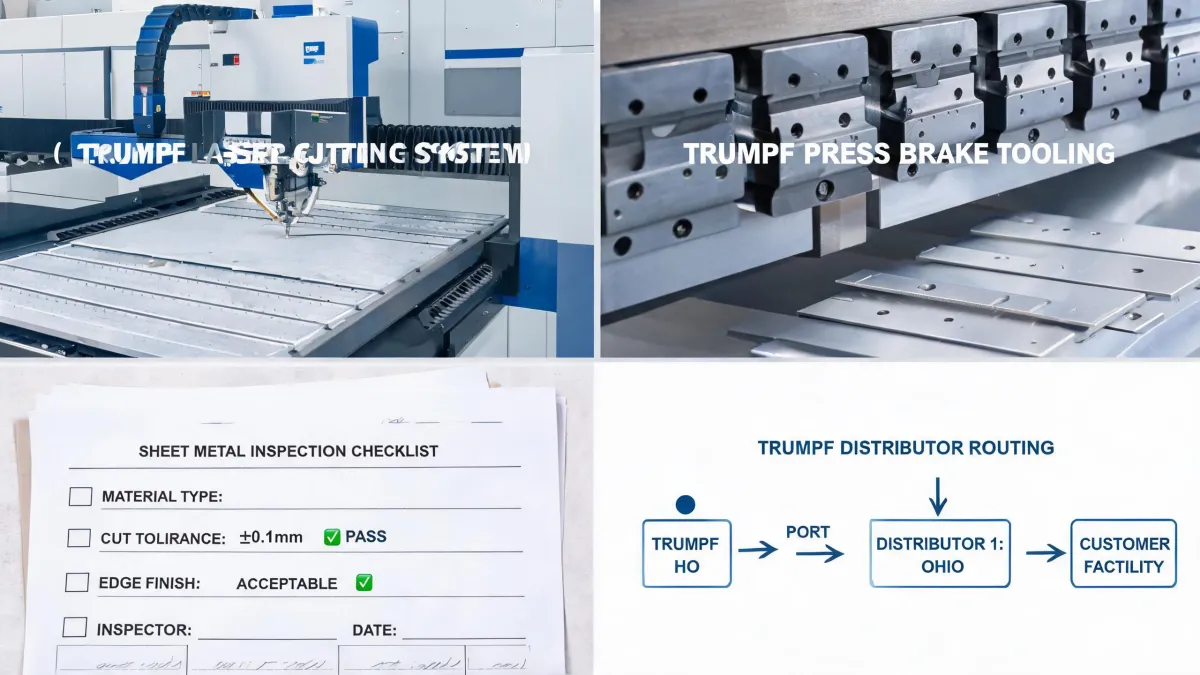
If you're doing small batches, complex geometries, or frequent material switches, you need flexibility, not raw speed. In Q2 2023, we tested a Trumpf TruLaser 1030 fiber laser for some aerospace prototypes. It handled stainless steel up to 12mm, but the real win was the quick-change nozzle system—we switched materials in under 5 minutes.
Total cost breakdown from our 2023 audit:
- Machine: $45,000 (leased; 5-year term)
- Annual maintenance: $1,200
- Consumables per prototype run: $75 (nozzles, lenses)
- Downtime: 4 hours total across 6 months
- Total first-year TCO: ~$10,900 (including lease payments)
I want to say the payback period was about 14 months, but don't quote me on that—I'd have to check the spreadsheet. The point is: for prototyping, uptime and quick changeovers matter more than raw wattage. A 6kW machine would have been overkill and seriously more expensive in power costs.
Scenario 2: High-mix, low-volume job shops
This is where things get interesting. We run about 30-50 orders per month, ranging from 10mm aluminum brackets to 3mm steel enclosures. In early 2024, I compared a Trumpf TruLaser 3030 fiber versus a CO2 alternative. The numbers surprised me.
"When I compared our Q3 and Q4 results side by side—same vendor, different specifications—I finally understood why the details matter so much."
Real comparison from our 2024 vendor analysis:
- Vendor A (TruLaser 3030 fiber): $62,000 upfront, 10kW, cutting speed 30 m/min on 6mm steel
- Vendor B (CO2 equivalent): $48,000 upfront, 8kW, cutting speed 22 m/min
On paper, Vendor B was $14,000 cheaper. But when I calculated TCO over 3 years:
- Vendor A: annual power $2,100, consumables $1,800, uptime 97%
- Vendor B: annual power $3,400, consumables $2,500, uptime 92%
Result: Vendor A was actually $3,200 cheaper per year after accounting for efficiency gains. The "cheap" option cost $14,000 less upfront but $9,600 more over 3 years. That's a 200% difference hidden in operating costs. The best part of finally getting our vendor process systematized? No more 3am worry sessions about whether the order will arrive.
Scenario 3: Production line with large capacity CNC turning & press brake work
If you're running a 10- or 20-person production line, speed and repeatability are king. In 2023, we added a Trumpf TruBend 5000 press brake for some automotive brackets. I got some pushback from the CEO about the $180,000 price tag. But I showed him our historical data: over 6 years, we'd spent $42,000 on rework just from inconsistent bends.
From our cost tracking system (2023-2024):
- Old press brake: rework rate 12%, scrap rate 4%, average downtime 1.5 hours/week
- TruBend 5000: rework rate 2%, scrap rate 0.5%, downtime 0.2 hours/week
The annual savings? About $7,800 from reduced rework, plus another $2,400 from lower scrap. That means payback in just under 18 months. Hit 'confirm' on that PO and immediately thought 'did I make the right call?' Didn't relax until the first batch came out perfectly within tolerance.
But here's the kicker: if I could redo that decision, I'd invest in better training before buying the machine. You need skilled operators—otherwise the $180,000 machine just sits there. The TCO includes training time, especially for something like "how to operate a CNC press brake" properly.
How to figure out which scenario you're in
Ask yourself these three questions:
- What's your average batch size? If it's under 50 units, prototype scenario. Over 500 units, production scenario. In between? High-mix job shop.
- How often do you change materials? More than 3 times a week? You need flexibility (scenario 1 or 2). Once a week or less? Production line makes sense.
- What's your biggest quality issue? If it's tolerances, invest in precision (scenario 3). If it's speed, optimize for throughput (scenario 2).
Most shops (about 70% of my evaluation over 5 years) land in scenario 2. But I've seen two small shops that switched vendors for a "deal" and ended up regretting it because they ignored their material diversity. A 1500w handheld laser welder cleaner might be a cheap entry point for small repairs, but it won't replace a flatbed cutter for production.
Bottom line: map your real needs first. Test vendor quotes side by side. And always calculate TCO—not just the monthly lease payment. If I sound like a broken record, it's because I've eaten the cost of skipping that step twice.
Technical note on laser power density: According to standard laser engineering references (see www.trumpf.com for their white papers on laser cutting), the required power density for laser cutting is approximately 10^6 to 10^7 W/cm² for efficient melting. A 10kW fiber laser with a 200μm spot diameter gives a power density of about 3.2 x 10^6 W/cm²—sufficient for most metals up to 12mm. This is why higher wattage isn't always better; focusability matters.
Source: General laser processing physics; specific machine specs may vary. Verify current specifications from Trumpf.
Prices are from our 2023-2024 procurement records, which I've cross-referenced with current market data. But always get current quotes—things change fast in the industrial space.