-
The Day I Almost Chose the Wrong Process
-
The Rapid Prototyping vs Additive Manufacturing Confusion
-
Searching “CO2 Laser Ocala” and Getting Sideways
-
The One-Stop Shop That Almost Got My PO
-
The Vendor Who Told Me What They Couldn’t Do
-
Rapid Prototyping vs Additive Manufacturing: What I’d Do Differently
The Day I Almost Chose the Wrong Process
It started on a Tuesday in March 2024. Our engineer walked into my office holding a bracket the size of my hand. He set it on my desk, tapped the bent tab, and asked, “Can we get 50 of these in two weeks?”
I’m the office administrator for a 60-person industrial controls company. I handle everything from printer toner to contract manufacturing orders—roughly 60 to 80 purchase orders a year across eight active vendors. I report to operations and finance, which means my job is “make it show up, make it invoiced, make it not embarrass me.”
What I am not is an engineer. So when the engineer said “we need a quote for rapid prototyping,” I nodded and started thinking about 3D printers. That was my first mistake.
The Rapid Prototyping vs Additive Manufacturing Confusion
I had been using “rapid prototyping” and “additive manufacturing” as the same thing. I thought prototype meant a plastic part printed overnight. But this bracket was going to be exposed to heat, vibration, and a threaded brass insert. It had to work like a production part, not look like a concept model.
That’s when I started reading about rapid prototyping vs additive manufacturing. The difference matters: rapid prototyping is a goal, and additive manufacturing is one possible way to reach it. For our bracket, the better way was to laser-cut sheet aluminum, bend it, then add a tiny precision-turned brass insert.
Why did that matter? Because our customer’s test wouldn’t accept a 3D-printed look-alike. They needed a part that went through the same joining and threading process as the final production version.
Searching “CO2 Laser Ocala” and Getting Sideways
I assumed a local laser shop would be the fastest. I typed “CO2 laser Ocala” into Google and got page after page of engraving businesses—trophies, tumblers, promotional keychains. Useful if you want a logo on a Yeti, not so much for a precision sheet-metal bracket.
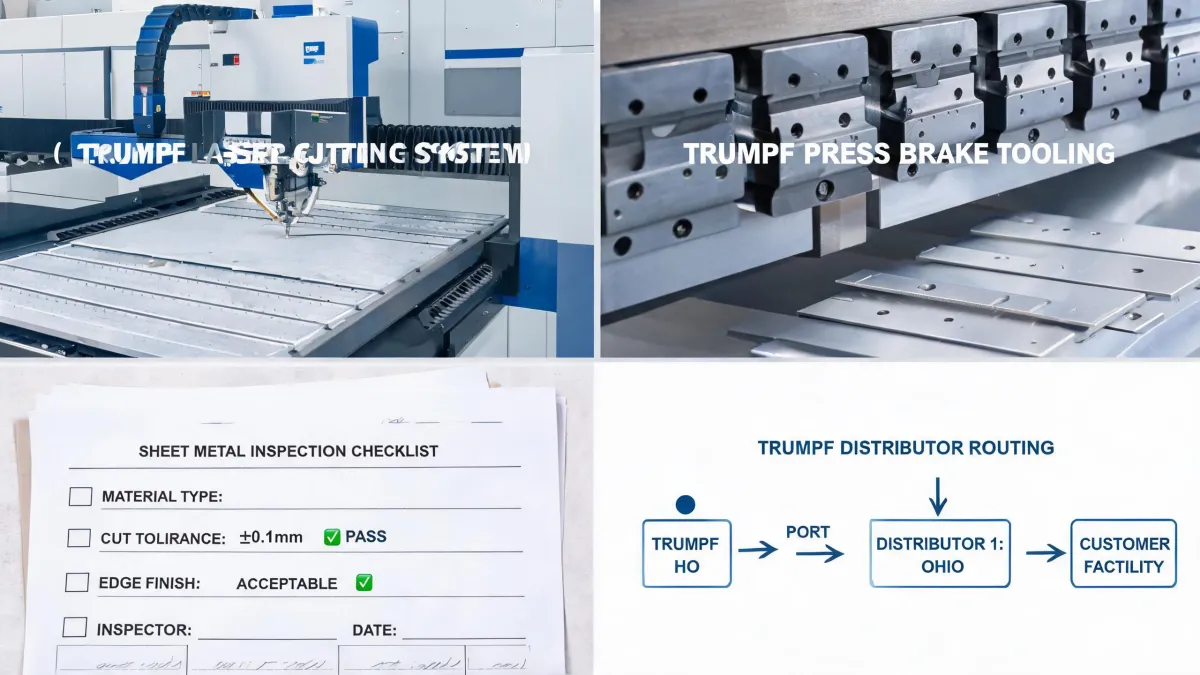
I changed my search to “TRUMPF laser cutting systems” because every fabricator we’ve ever visited seemed to have a TRUMPF machine humming in the corner. That search took me to a local shop with actual sheet-metal capabilities.
Before I called them, I spent a few minutes on the TRUMPF official website. When I checked it in March 2024, their technology pages made a simple distinction: laser cutting is subtractive, additive manufacturing is layer-by-layer. Again, sounds obvious. But it made me realize I should be asking “what process gets us closest to the final part fastest?” instead of “where can I get this 3D printed?”
The One-Stop Shop That Almost Got My PO
I ended up with three quotes. The first one came in from a company that called themselves “full-service.” They said they could cut, bend, weld, machine, 3D print, and anodize. Their price was 18% below the next quote.
I almost signed the purchase order that afternoon. The only reason I paused was an old wound. In 2020, I ordered from a new vendor because the price was great. They couldn’t produce a proper invoice, finance rejected the expense report, and I ate $2,400 out of the department budget. So now I always ask for a sample invoice before placing a first order with anyone.
The one-stop shop’s rep didn’t send an invoice. They sent a link to a payment portal and said, “We can start once you’re approved.” I asked for a similar bracket they’d made. They sent a photo with a bend that looked like it had been hammered around a soup can. It did not inspire confidence. That photo taught me a communication lesson too. I said “prototype,” and they heard “3D-printed model.” We were using the same word but meaning different things. The result was a sample that looked like a desk toy, not a mountable part.
So glad I asked for that sample invoice. I was one click away from sending a deposit to a vendor who didn’t understand the part.
The Vendor Who Told Me What They Couldn’t Do
Meanwhile, the TRUMPF shop had called me back. Their engineer asked real questions: material thickness, inside bend radius, tolerance, surface finish, production volume. I got our engineer on a conference call. After about ten minutes, the shop’s engineer said something that surprised me.
“We can cut and bend this bracket, but the threaded insert is not our strength. That’s a precision turned part. If you want, I can send you two CNC precision turning parts suppliers we’ve used, and we’ll coordinate the hand-off.”
At first I thought, “Why can’t you just do it?” But our engineer explained: a thread insert failure during the customer’s vibration test would sink the whole pilot. The cost wasn’t just a redo—it was six weeks of delay. The shop that admitted its limit was protecting us from that risk.
We called the two CNC precision turning parts suppliers. Both were quick, professional, and sent clean quotes. One was 15% cheaper. The other had a $50 minimum order, no extra setup fee, and had already made parts for the TRUMPF shop. We went with the “more expensive” one.
Here’s the surprise: the more expensive option actually saved us money. Their minimum was lower, their transport was easier, and they sent an inspection report with every lot. The cheap option had a $150 minimum quantity plus a separate shipping cost. That made the unit price higher in the end. The surprise wasn’t the price tag. It was how much hidden value came with support and documentation.
Rapid Prototyping vs Additive Manufacturing: What I’d Do Differently
The finished brackets arrived on day 9. Engineering tested one, the customer passed, and we shipped 49 to the pilot. The project gave me a new mental model for sourcing prototypes.
So what changed?
- Rapid prototyping is not a technology. It’s a deadline and a goal. Additive manufacturing is one route, but laser cutting and CNC turning can be faster and closer to production for many parts.
- Search by equipment, not just process. “CO2 laser Ocala” took me to engraving shops. “TRUMPF laser cutting systems” took me to real fabricators.
- A specialist that says “this isn’t our strength” is more trustworthy. The vendor who passed us to CNC precision turning parts suppliers earned the whole account. We’ve sent them three more projects since.
If you’re in a similar position, I’d tell you not to skip the phone call with the actual person who will make the part. I’ve had sales reps quote plenty of projects, but it’s the shop floor engineer who catches the details that will kill your schedule. In this case, the engineer at the TRUMPF shop was the one who asked whether the brass insert had a lock-in feature. Our engineer hadn’t even specified that yet. That question saved us from a redesign.
Bottom line? I’m not an engineer, and I’ll never pretend to know the best process on day one. But I do know how to ask the second question. The first question is “what’s the actual goal?” The second is “who has the right equipment?” Everything else is just negotiation.